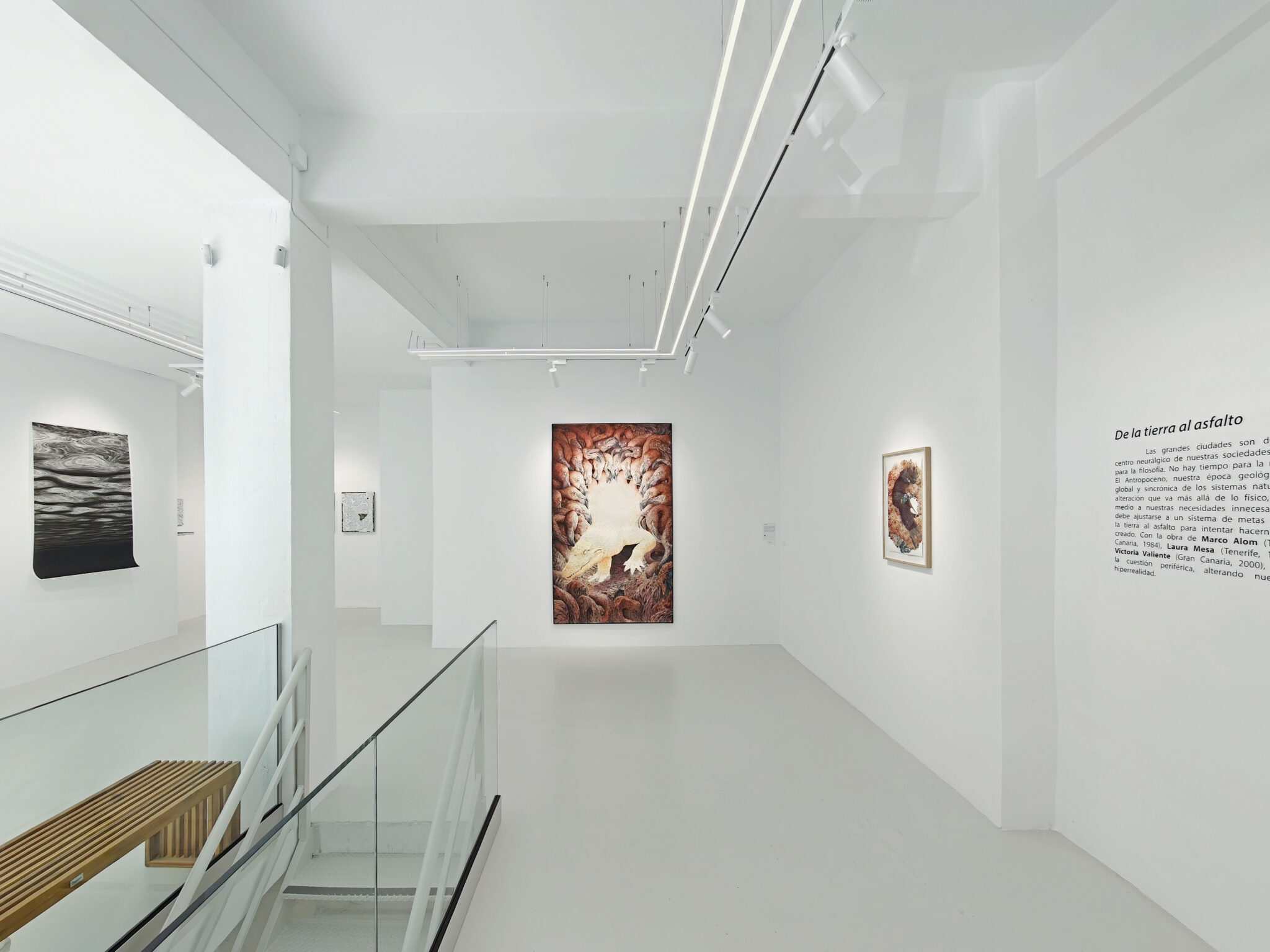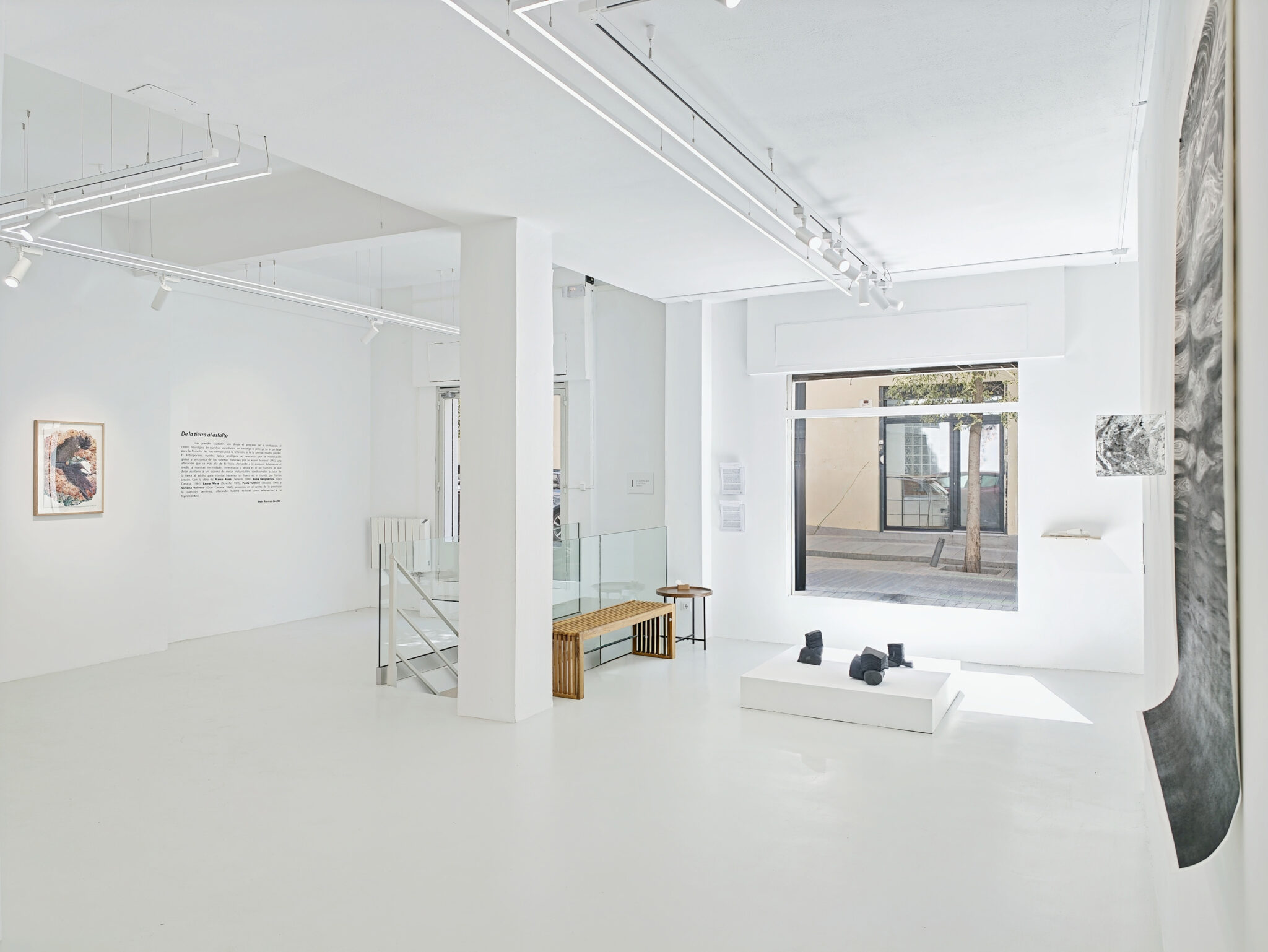
Since the dawn of civilisation, large cities have been the nerve centre of our societies; yet the polis is no longer a place for philosophy. There’s no time to ponder; if you think about it too much, you’ll lose. The Anthropocene, our geological epoch, is characterised by “the global and synchronous modification of natural systems through human action” (Royal Spanish Academy of Language), a change that goes beyond the physical, affecting the psychological as well. We have adapted the environment to our unnecessary needs, and now it is human beings who must adapt to a system of unattainable goals, forced to move from earth to tarmac in an attempt to carve out a place for ourselves in the world we have created. Through the work of Marco Alom, Luna Bengoechea, Laura Mesa, Paula Valdeón and Victoria Valiente, we place the peripheral question at the heart of the peninsula, altering our reality to adapt to hyperreality.
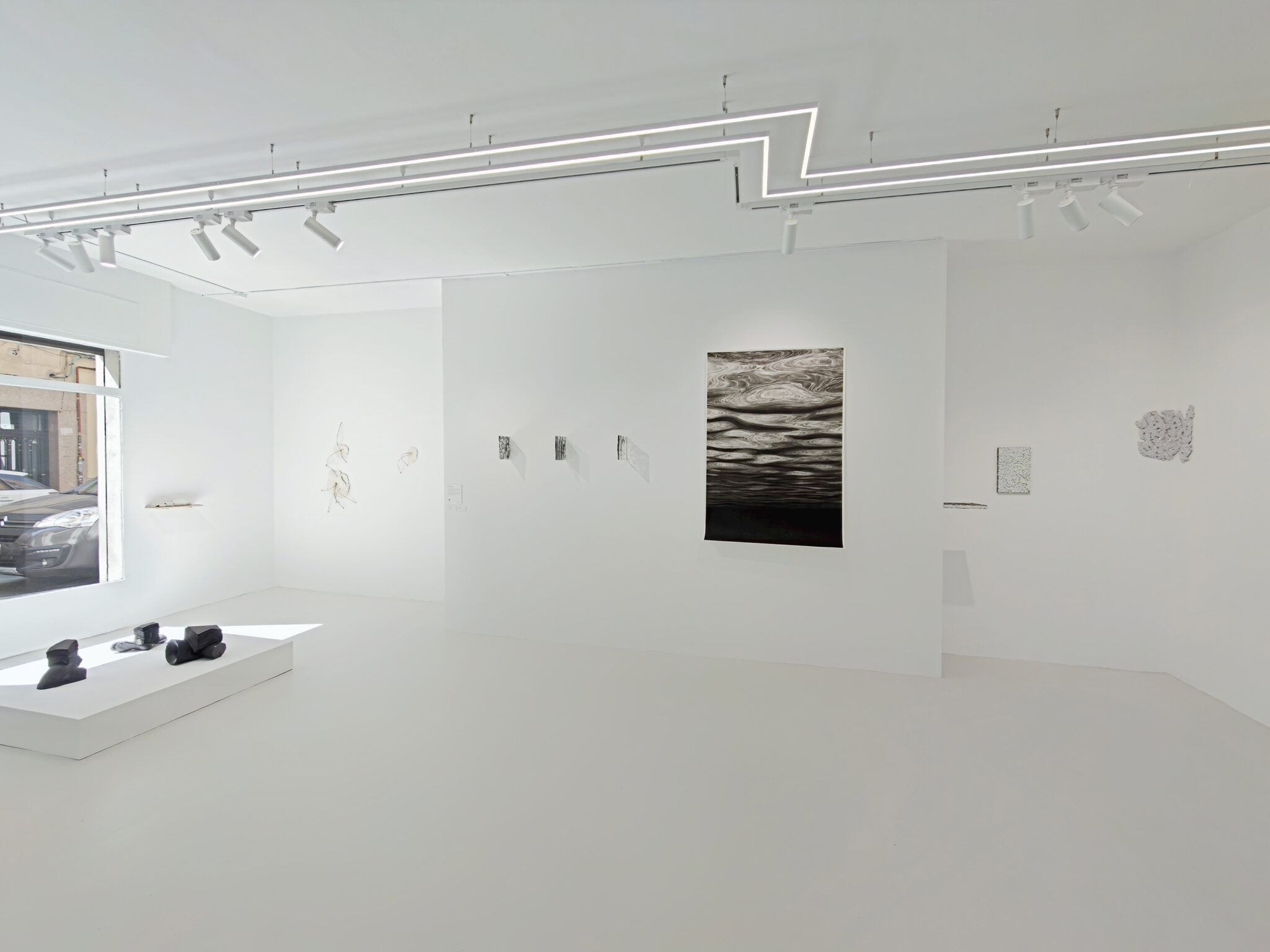
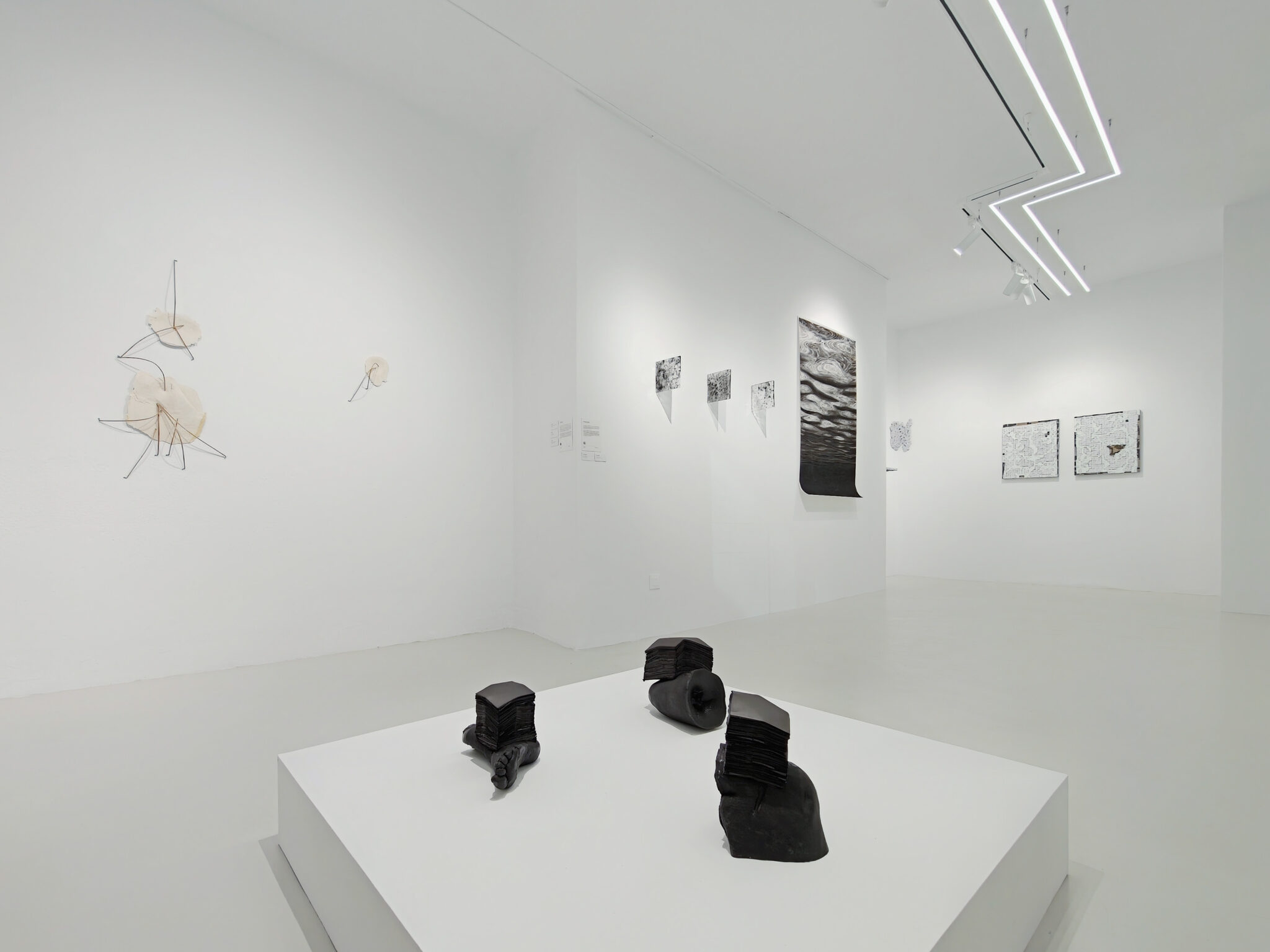
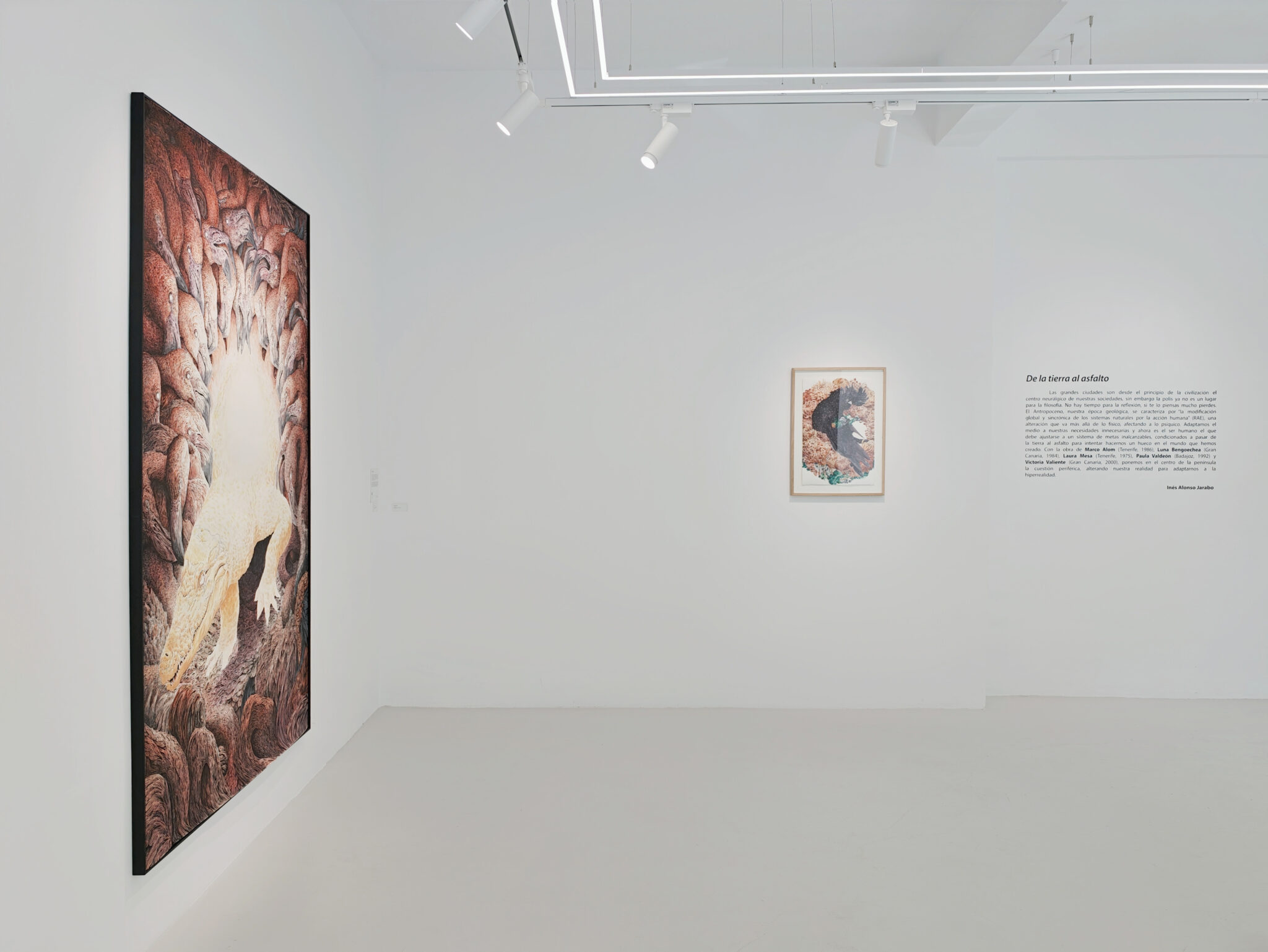
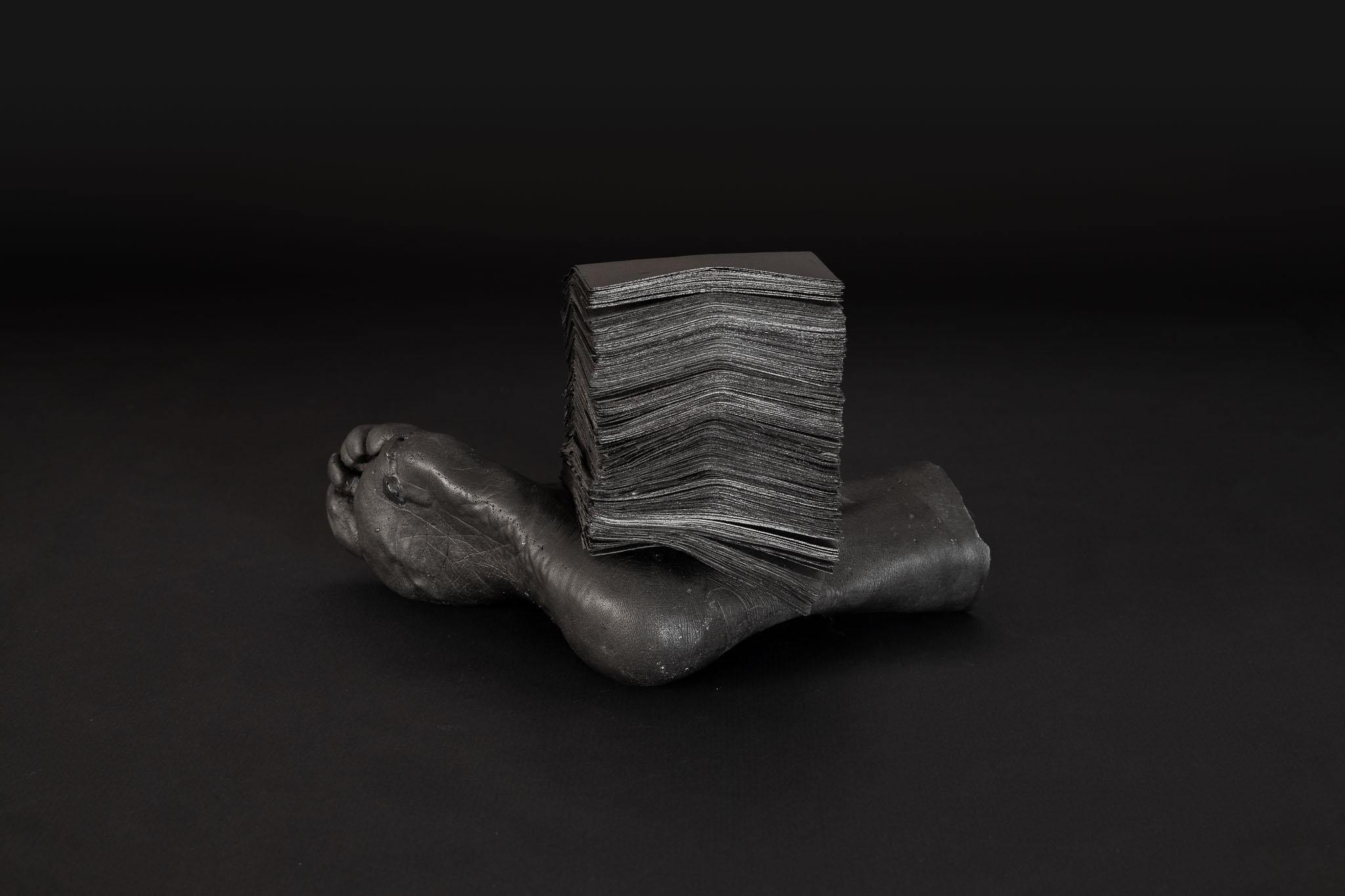
As you walk in, a large drawing by Marco Alom harpoons your gaze. The beings that inhabit his artworks serve as symbols of that which we cannot see but which exists nonetheless: anthropology, myths, metaphysics and history as the fabric of culture. Marco Alom illustrates how, from the very beginning, human beings have created fables to explain the unknown—the reality that eludes our understanding and which we construct through language. In this work, light emerges from that primordial chaos symbolised by flamingos with their beaks and the movement of their feathers, like a tunnel being carved out by the crocodile as it begins to light the way. Light and darkness, chaos and calm are thus intrinsic concepts, each dependent on the other to coexist in a world full of contradictions that we insist on making sense of. Through a completely different formal approach, we can see this dichotomy in the work of Laura Mesa , who specialises in painting and sculpture and holds a PhD in drawing. Her work focuses on the theoretical-formal investigation of our relationship with reality and its representation, playing with the tension created between these two concepts. Her Support series visually depicts the forces and tensions we experience on a daily basis, rendering strength fragile and tension vulnerable, breaking down concepts in order to redefine them. Conceptually, this series functions as the inverse of Fragments, a body of work made from compressed graphite dust. In these works, the articulated forms occupy the space, while the pieces on the wall represent the voids they create when placed against it. “Thus, tension, support, vulnerability and the body seek to empower one another, drawing strength from the fragility of that which may fail”, in the artist’s own words.
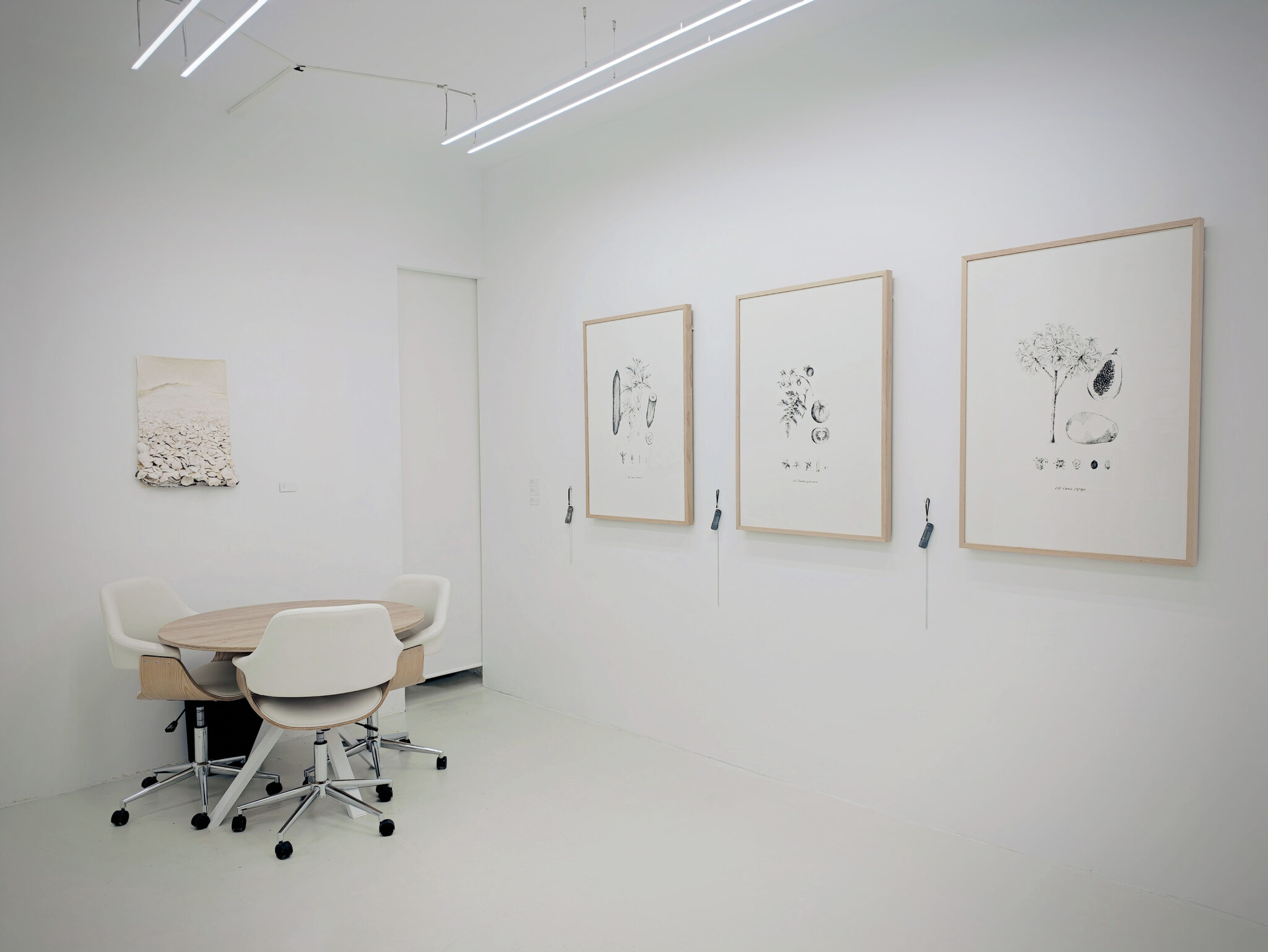
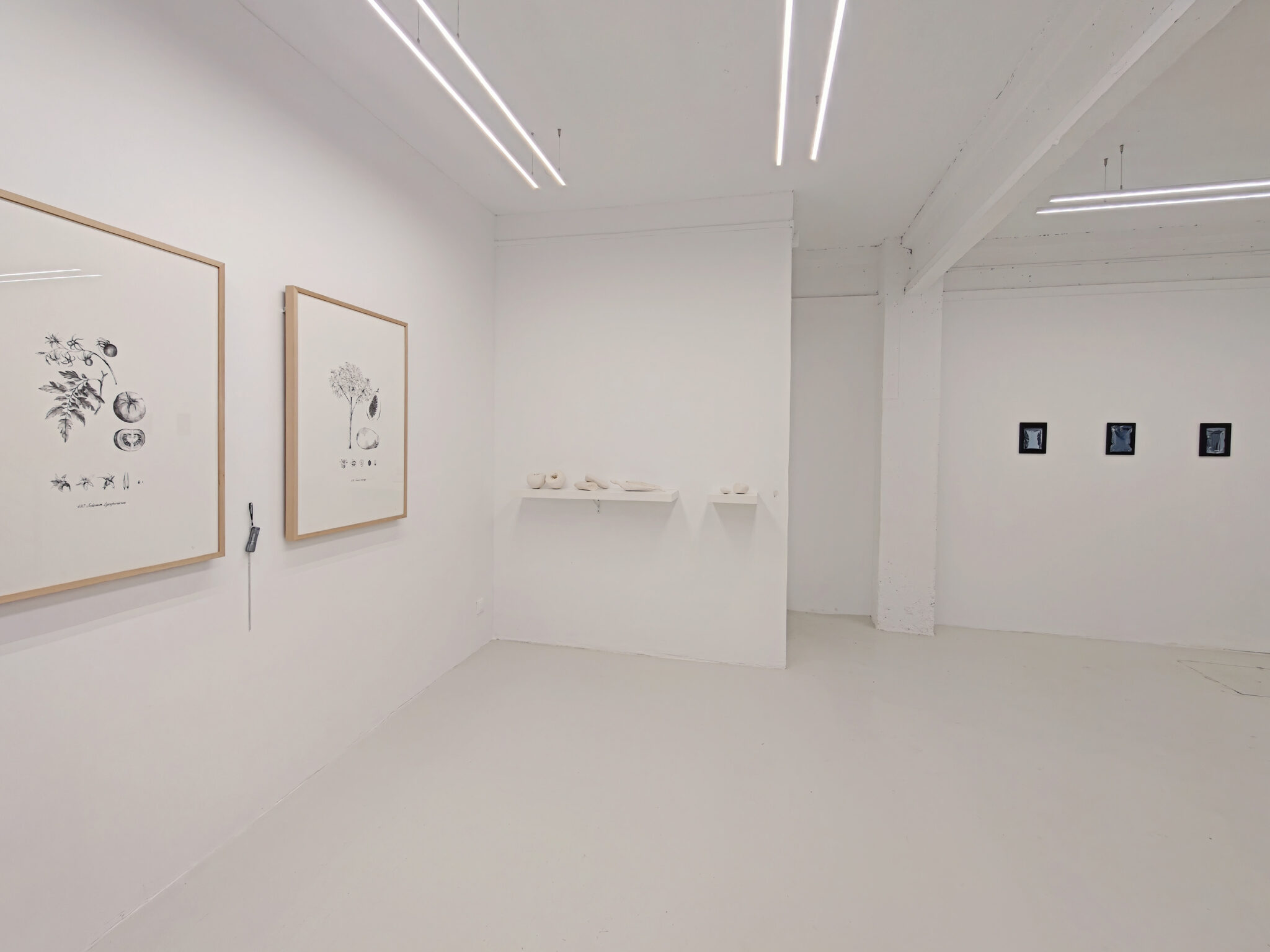
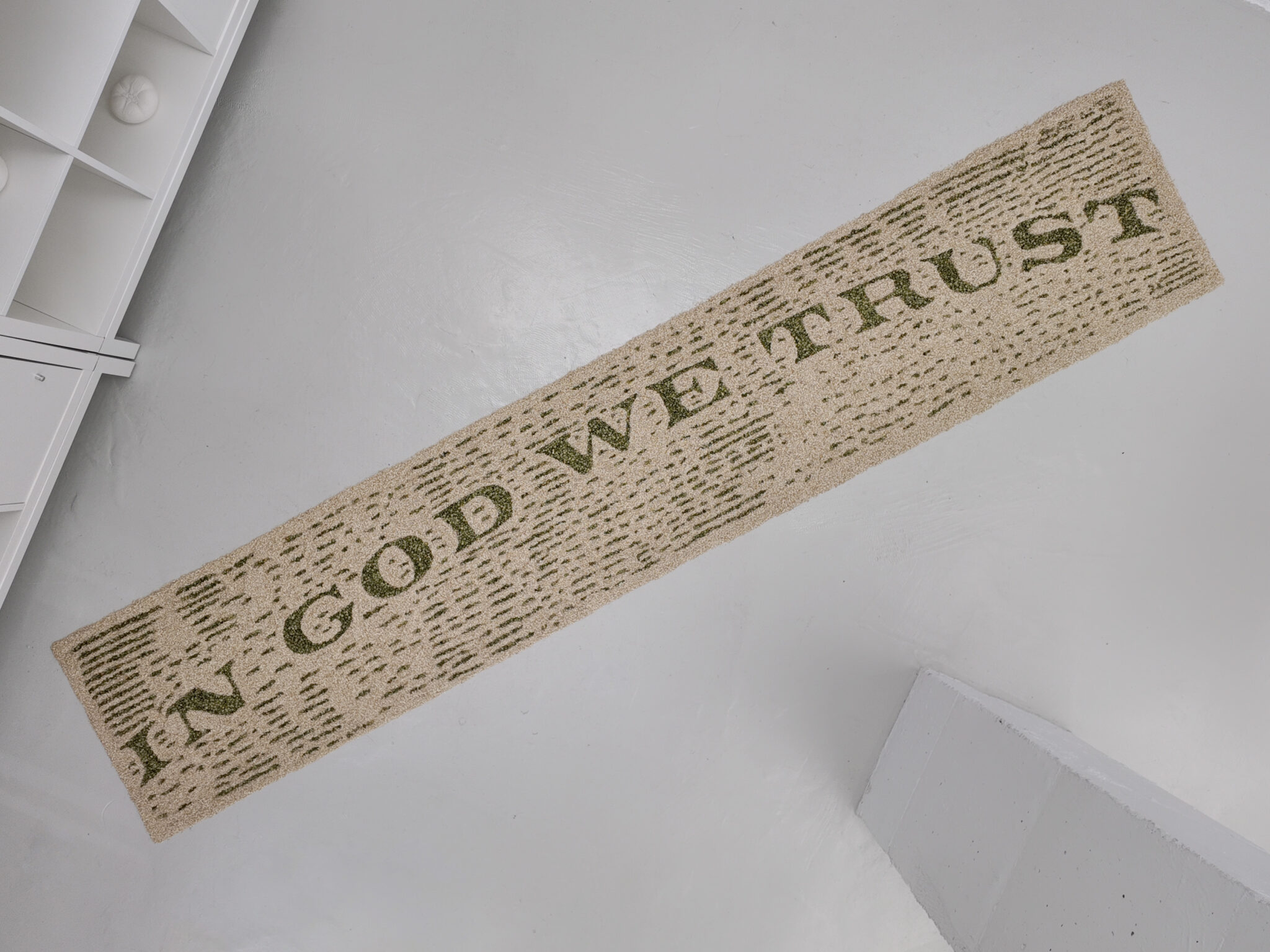
From the symbolic nature of language in Laura Mesa’s work, we move on to the sensory realm with Victoria Valiente, for whom water plays a central role in her way of understanding and experiencing reality. This artist seeks to capture the fleeting nature of the seas and oceans on paper, a medium that, like us, is in perpetual motion. This analogy between water and life dates back to the 5th century BCE, when Heraclitus argued that we cannot step into the same river twice, for neither the river nor we ourselves will be the same in a reality where the only constant is change. As we become increasingly estranged from the nature that gave us life, we turn to its representation to feel close to it, in a simulation that, for the modern individual, feels more real than reality itself. From the natural environment to the man-made world of asphalt, where we spend so many more hours, Paula Valdeón draws inspiration from this fictionalised version of nature that we bring into cities through urban ornamentation, using these patterns as material to return to the organic with her distinctive aesthetic. In this way, the artist reflects on the fiction of the natural world we inhabit and how we come to terms with it, with memory and aesthetics serving as key factors that bring together the unique construction of each reality. As we descend the stairs, we encounter the work of Luna Bengoechea, where three ink drawings literally show how reality changes depending on how we look at it. These works appear to depict a tomato, a papaya and a cucumber in the style of 18th-century botanical illustrations. However, when illuminated with the torches provided, the UV-sensitive ink reveals the genetic modifications that have led to these fruits’ current state. Thus, Bengoechea highlights the silent disruption we have wrought upon the earth since the dawn of civilisation, taking its exploitation to extremes through macroeconomic agricultural policies and food biopiracy. Through her work, the artist aims to make us question the consequences of industrial production and the exploitation of natural resources, which treat our health as a bargaining chip. This exploration culminates in the installation IN GOD WE TRUST, created especially for the occasion.
In short, each artist, through their own techniques and codes, explores an epistemological question that affects us all and which we should bring to the fore more often: what is real about our reality? By understanding nature, humankind came to believe it could control it, altering our environment to the point where it became uncomfortable for the vast majority and far too comfortable for a select few. Culture, memory and history shape our perception of things, as we live in a world that is physically altered and conceptually shaped. A great illusion that began in the postmodern era, when people were migrating from the countryside to the big cities in search of a better life, only now to dream of owning a little house in the countryside and having the time to enjoy it. From Earth to Asphalt brings us closer to the nature from which we have become estranged, seeking to inject a touch of reality into cosmopolitan life through the work of these five artists.
Inés Alonso Jarabo