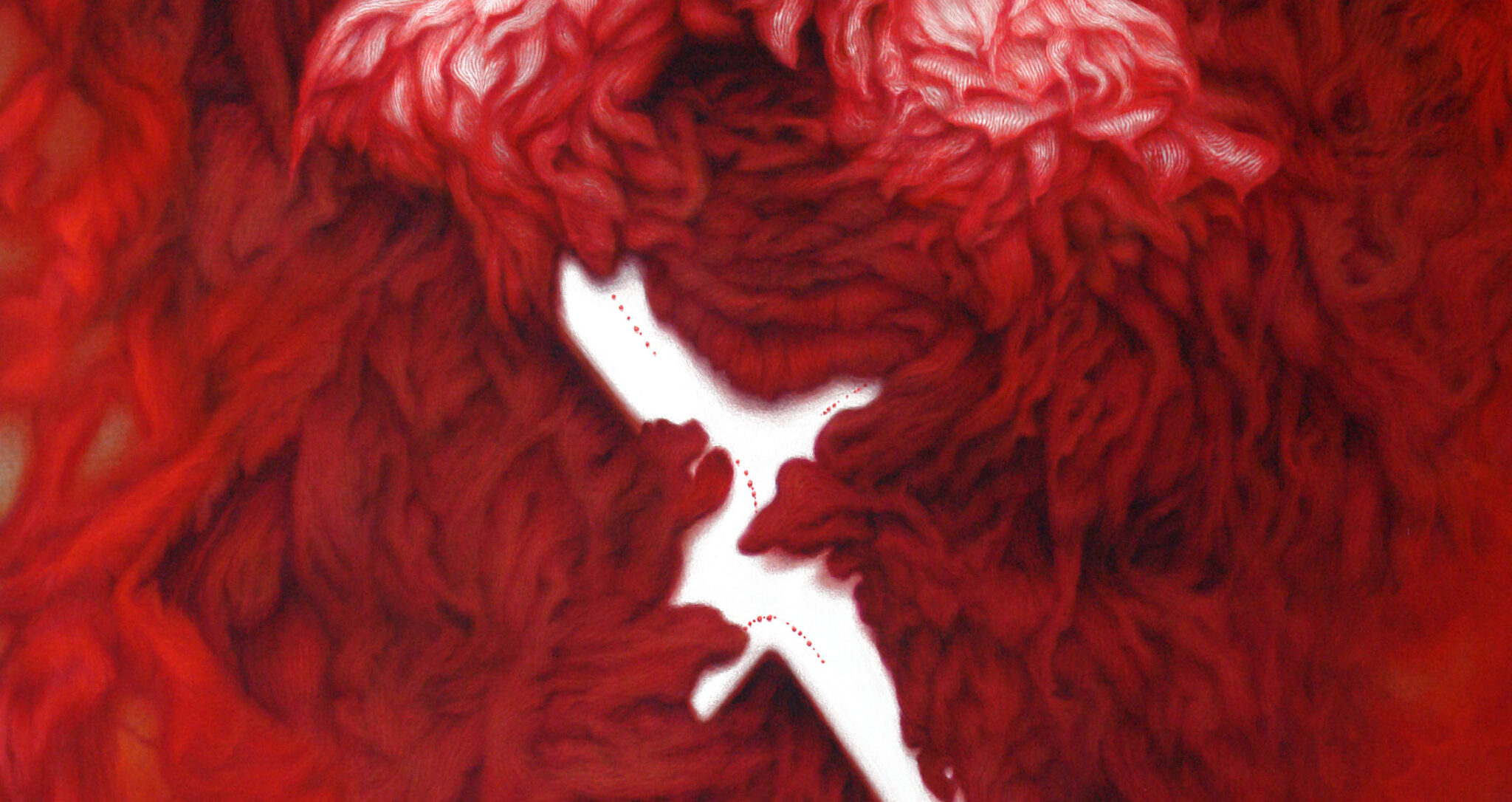
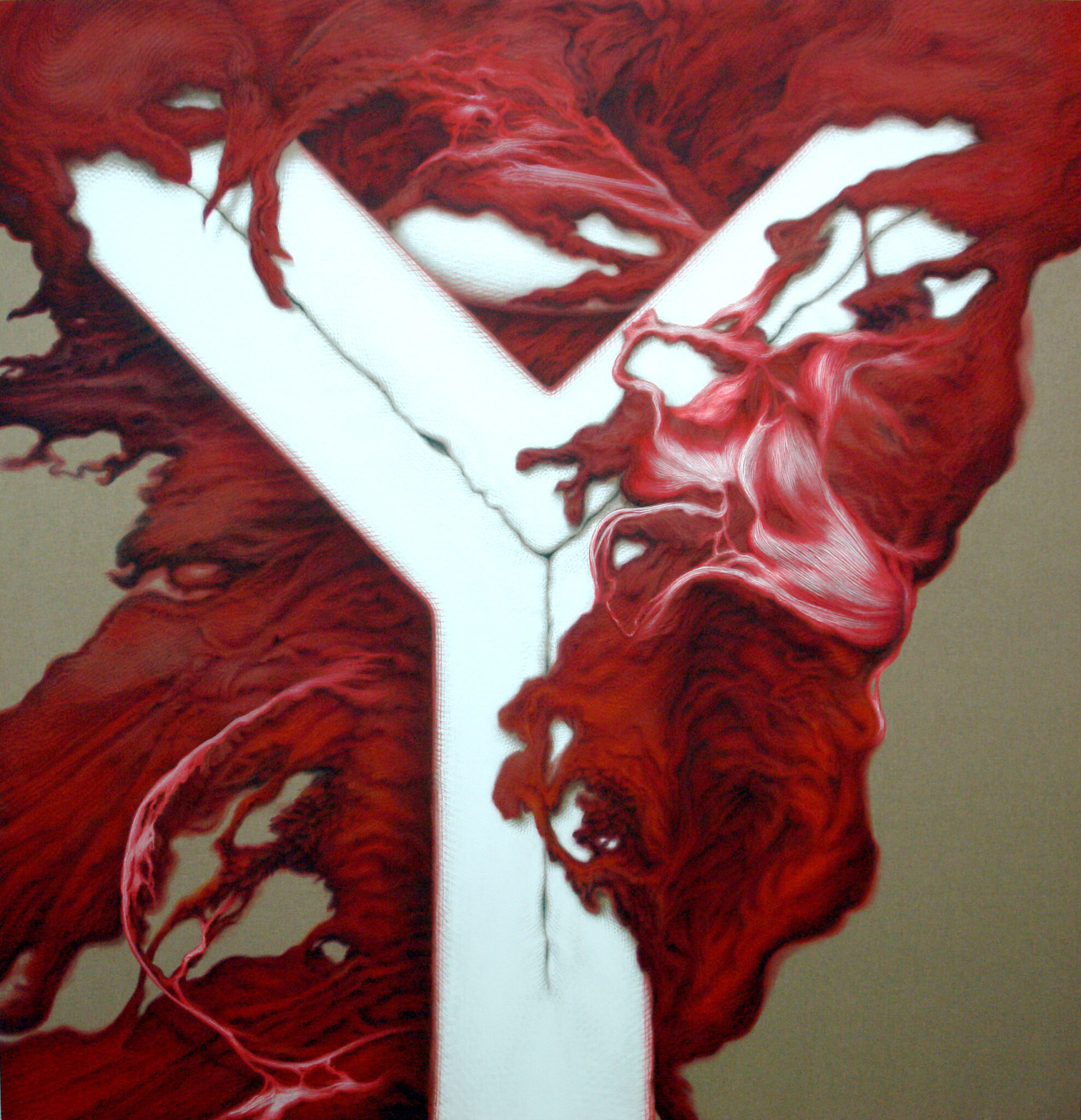
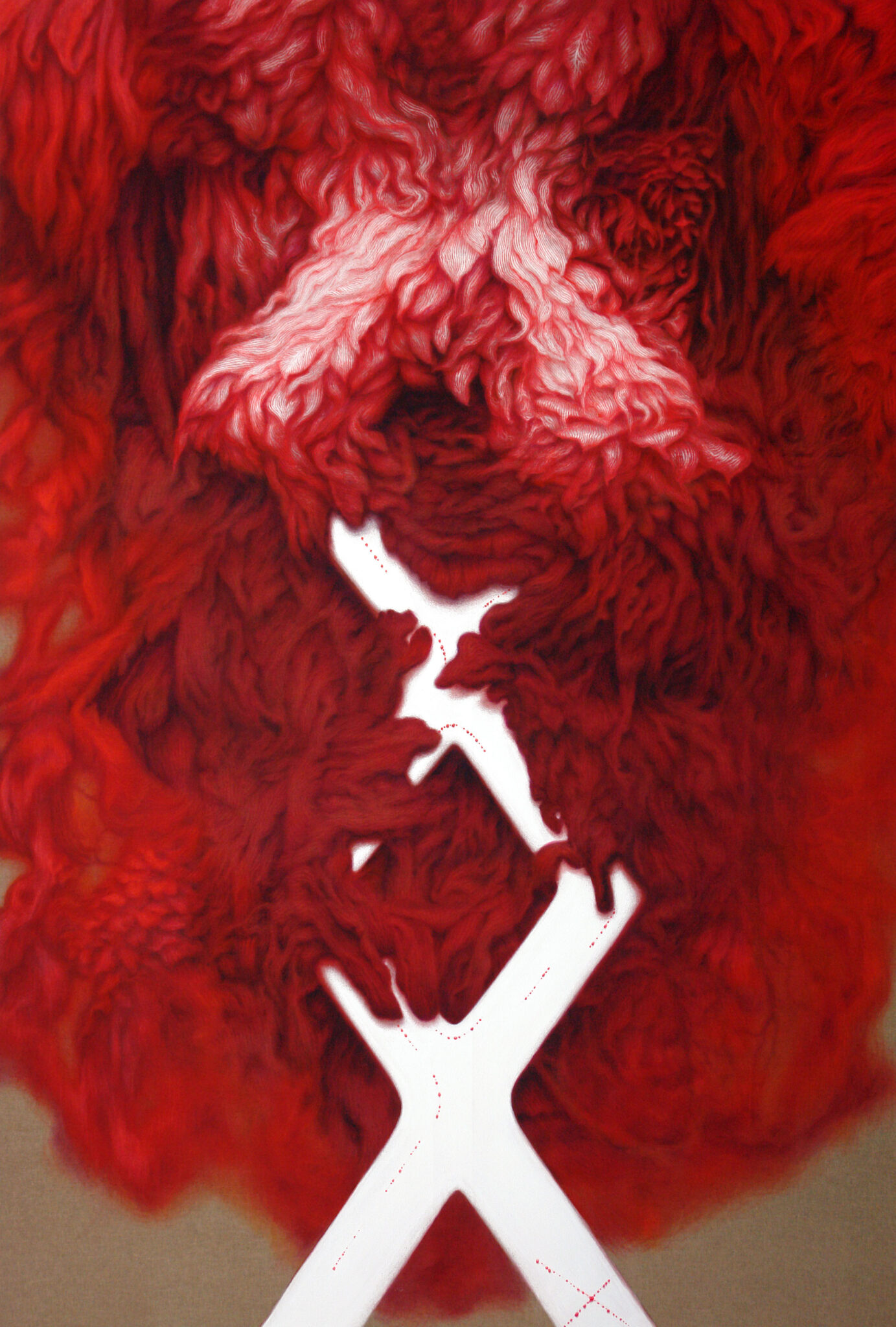
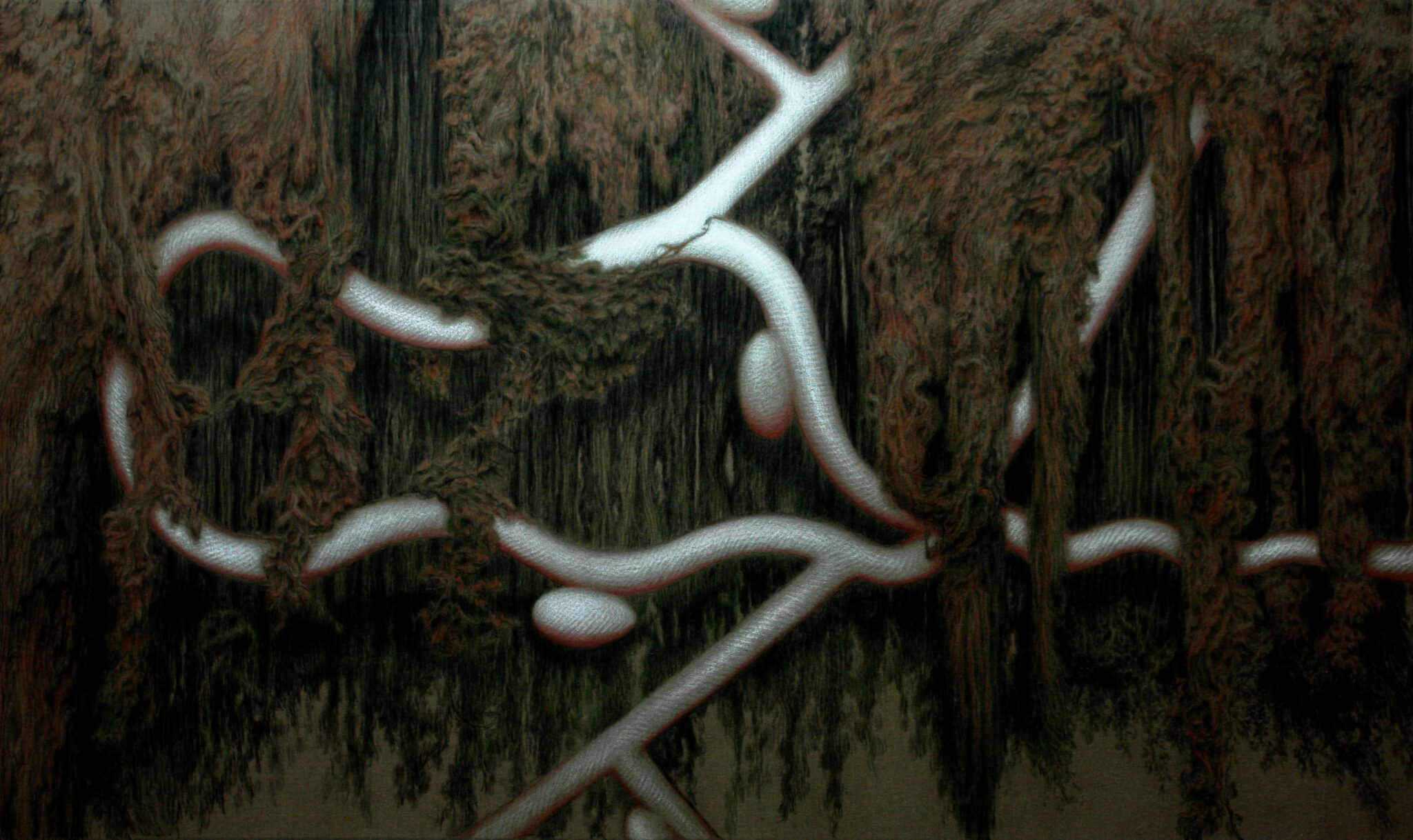
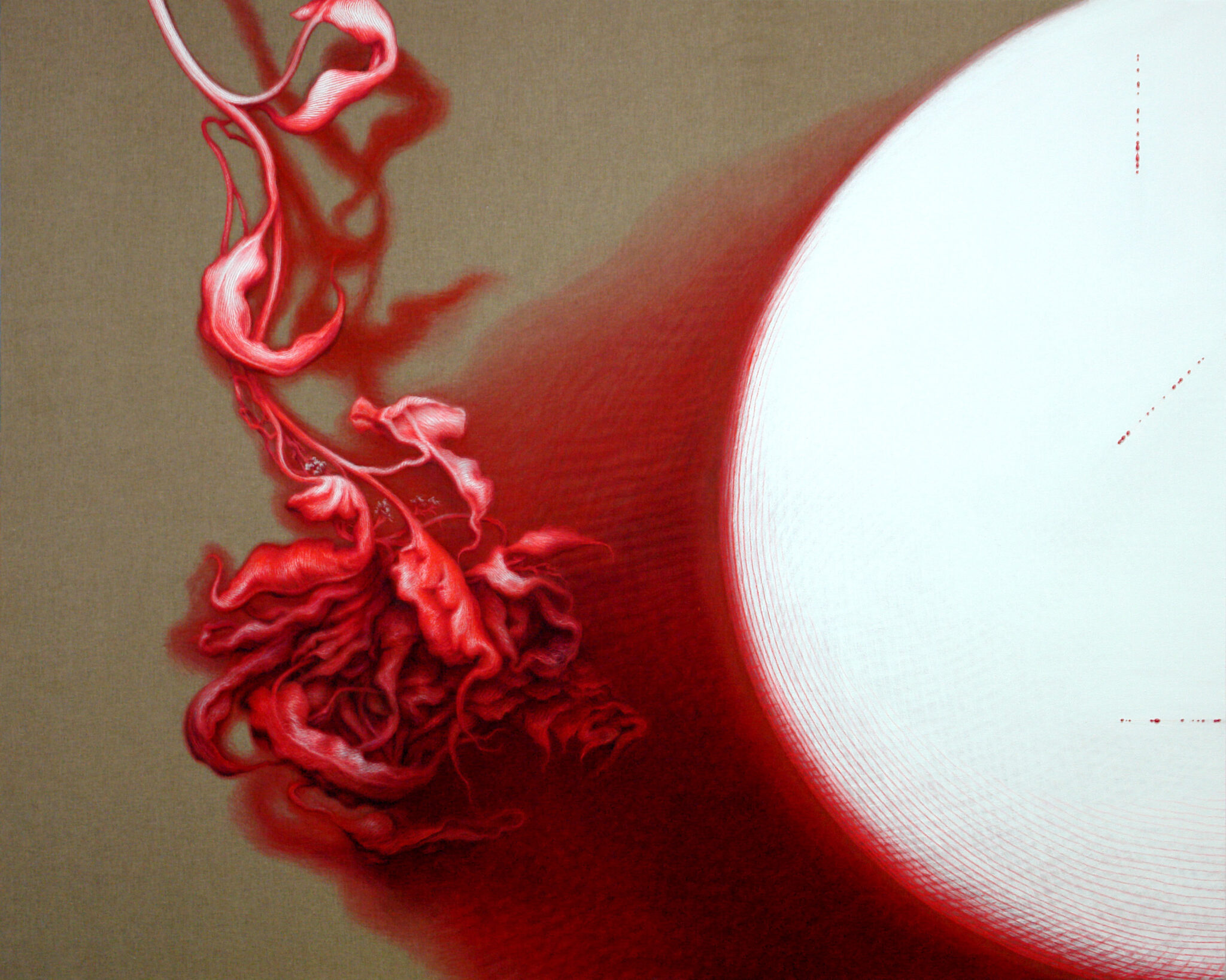
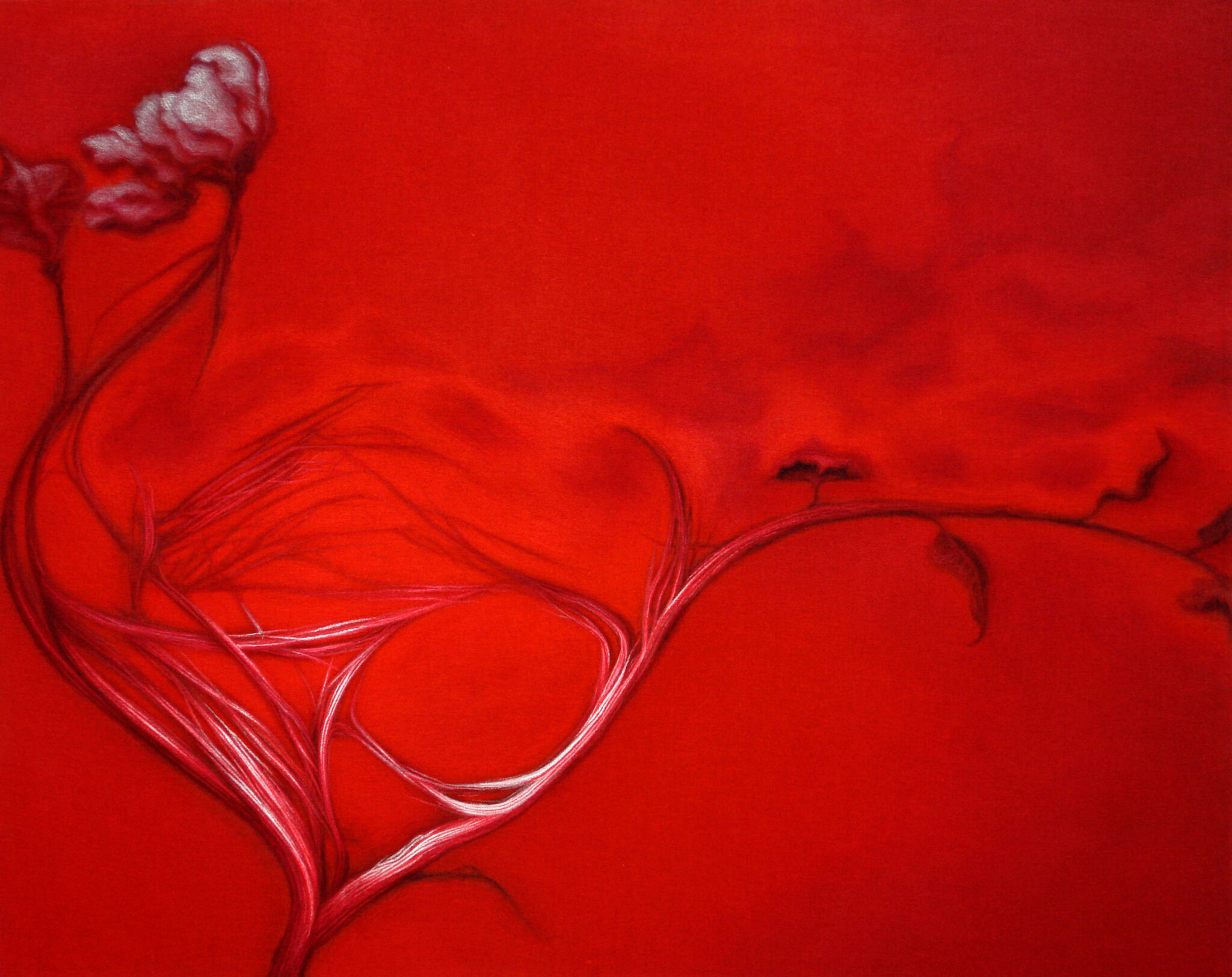
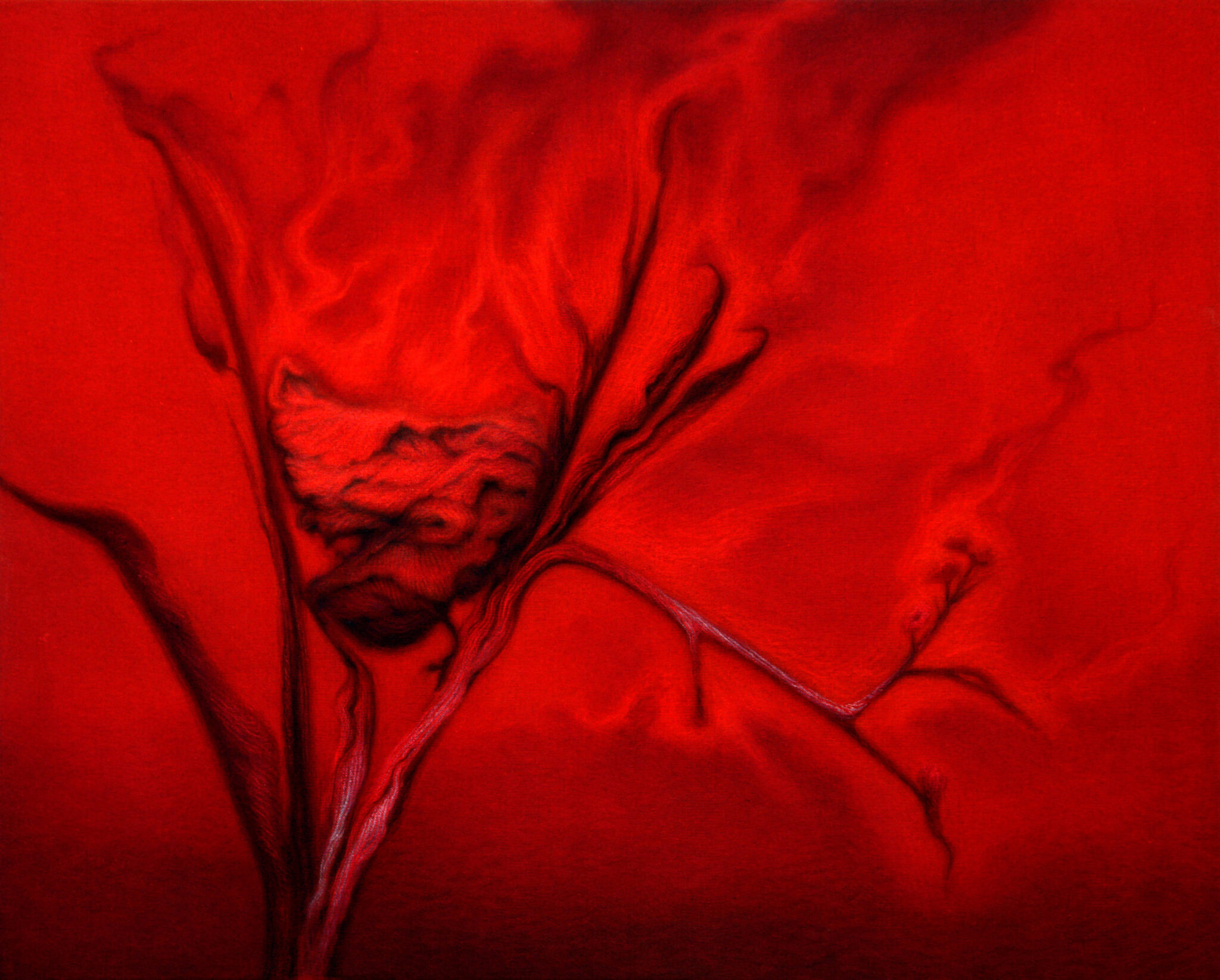
Artizar Madrid proudly presents Vez (A moment of seeing), the new exhibition by Jesús Zurita, exploring fear as a way of relating to reality. Through a series of paintings and drawings, the artist offers a reflection on what bewilders and disquiets us and the possibility of transforming that unease into an experience of knowledge.
Far from understanding fear as an emotion that urges us to flee, Vez focuses on the moment when we decide to stay and allow ourselves to sit with what we do not fully understand. It is precisely at that moment—when the gaze does not waver—that fear begins to transform into curiosity. The project begins with that transition: from the initial gesture of alarm to a willingness to observe and explore.
One of the images that provides a conceptual linchpin for the whole exhibition is that of a child sheltering beneath a blanket, daring to peer out into the darkness of the night. It is not a literal evocation of childhood, but rather a metaphor that invites us to consider the origin of our curiosity: the moment when the unknown ceases to be just a threat and starts to become an object we turn our attention to.
This idea is the seed from which the exhibition is grows, rooted in three visions that permeate the imaginary world created by these artworks: the forest, its density, and the body.
The forest provides a symbolic terrain onto which many of the tensions between the human and the unknown have historically been projected. In the stories and mythologies that are part of our culture, forests often mark the boundary of civilisation. They are a place where the horizon disappears and the rules that organise our everyday world seem to be suspended. Within that space, our sense of direction becomes uncertain, and reason ceases to offer logical answers.
The density of forest vegetation intertwines, weaving organic paths, shredded landscapes that deform the fabric of hierarchies. That density, therefore, becomes an image of the momentary loss of identity, or rather, a state in which the subject ceases to be at the centre and becomes part of an immense system, merging with it.
In that same context, the third vision of the project appears: the body. In Zurita’s artworks, the body is not presented as an isolated entity or as a strictly individual possession, but as an element within a living fabric common to both animal and plant life. Organic processes—circulation, growth, transformation— are thus linked to the cycles and dynamics of nature.
The pieces exhibited together in Vez do not seek to illustrate these ideas in a narrative sense. They are more like mandalas, in a way, inviting us to meditate. Virtual scenes, suspended, moments that seem to be just before a story begins to unfold. The exhibition proposes a way of relating to the artwork based on attention and coexistence with the images. Rather than offering closed interpretations, the artworks offer a space of experience, a process in which the viewer’s gaze actively engages with the construction of meaning. Vez is an invitation to reconsider fear not as a limit, but as a starting point. An illumination.
Susana Sanz Giménez