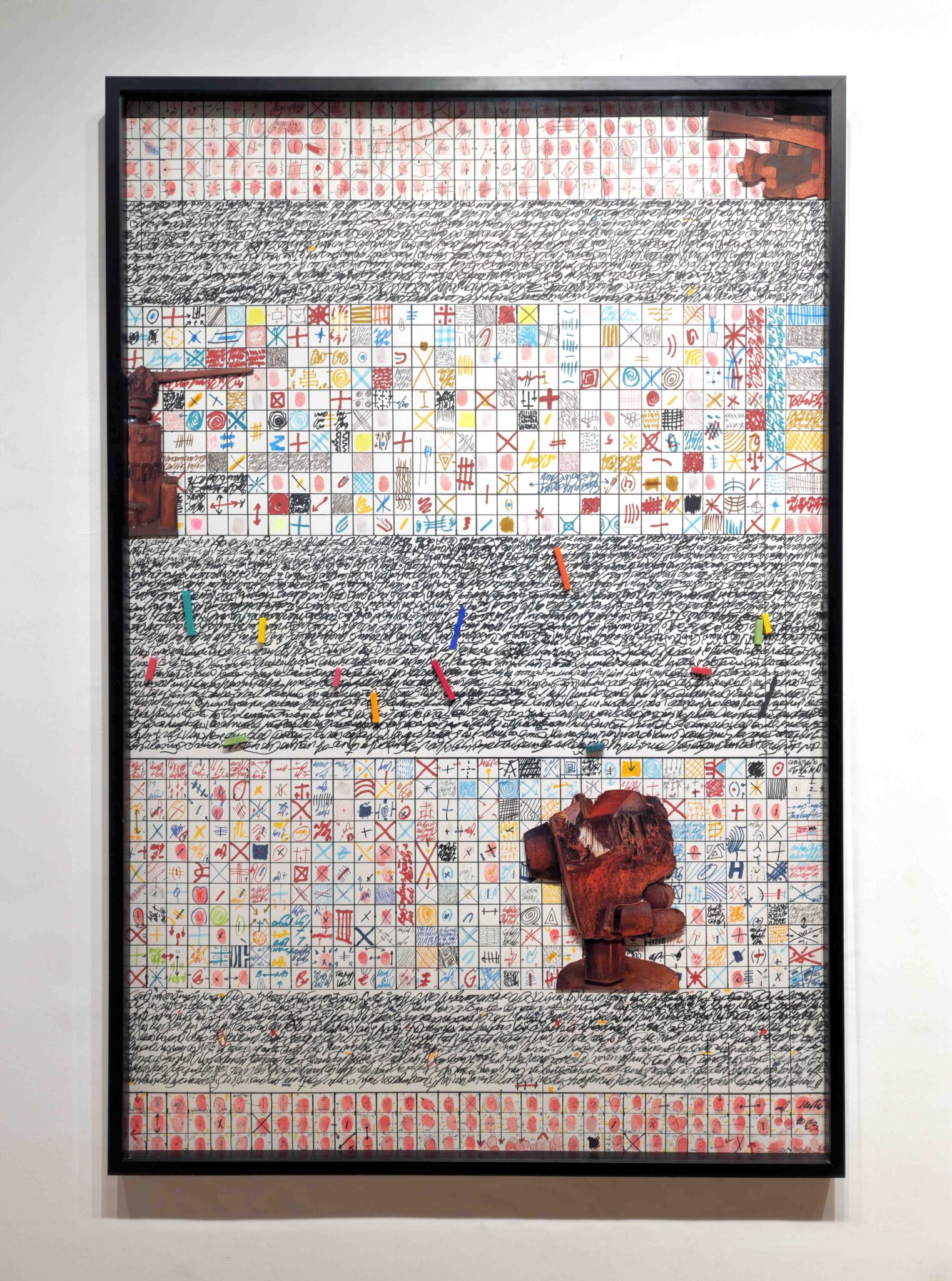
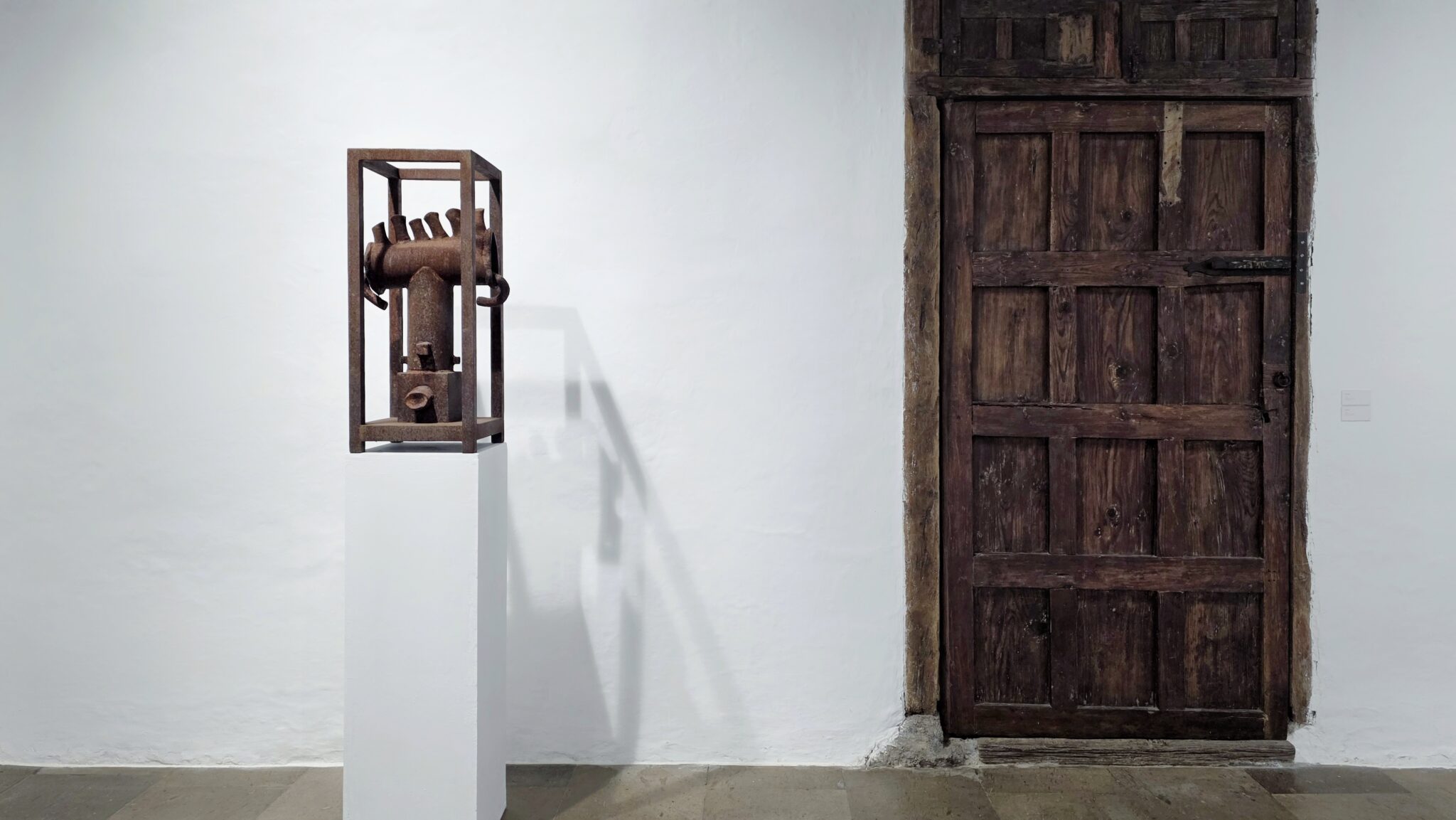
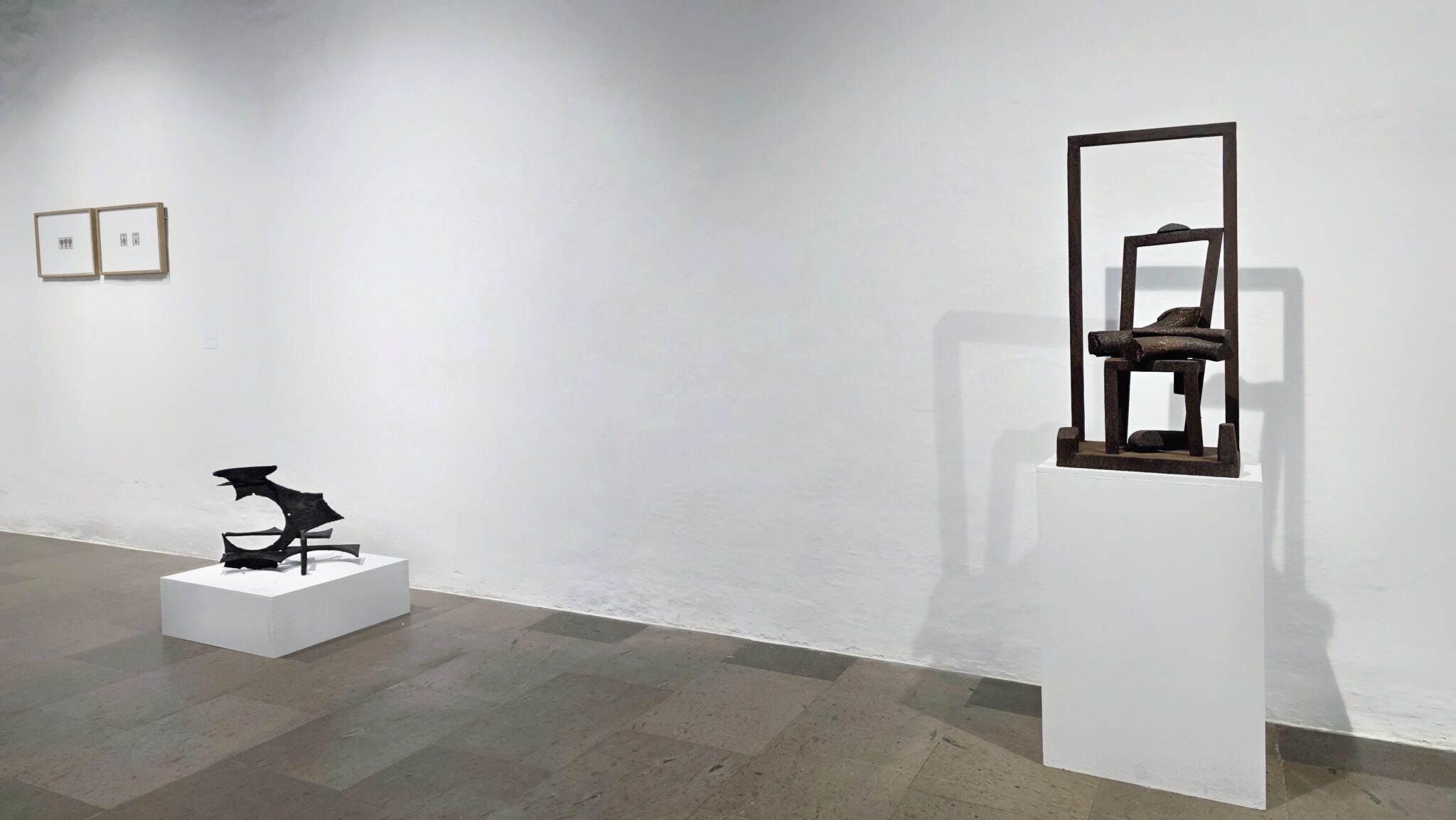
Dialogue with Vulcan was the title that José Abad (La Laguna 1942-2025) gave to a series of sculptural and collage artworks he created between 2021 and 2024, as he had done on other occasions. The stimulus and reference for these artworks came from the eruption of the Tajogaite volcano on the island of La Palma. Images of this volcanic activity were incorporated into a broad sequence of collages with the same title alongside those of the monumental sculpture made of corten steel created for Espacio Mutua Tinerfeña, where his last major exhibition was to take place, which closed a few months before his death.
Madreyerro, the culminating creative statement of José Abad, embodies a profound effort driven by the enthusiasm and artistic impulse that defined his life during the exhibition’s preparation. This show revisited and celebrated a rich body of work produced over the previous decade, thoughtfully complemented by pieces newly created or reinterpreted expressly for this presentation.
If Madreyerro became an unexpected farewell, the exhibition Dialogues with Vulcan at Galería Artizar welcomes Abad’s work into its legacy, adding his name to the gallery’s artistic roster with the full support of his estate. Both titles, Dialogues with Vulcan and Madreyerro, are coherent and complementary. While the latter refers to a lifelong filial bond, the former reveals the underlying framework for understanding Abad’s work and his approach to it.
Long before the moment of elemental order that inspired the series, José Abad was already in dialogue with Vulcan —the god of fire and earth, as well as the forge where the gods’ weapons and armour were crafted. This dialogue spanned the time from the artist’s first encounter with the fire of the forge and welding to create his initial “armours” and “weapons.” This extraordinarily fruitful exchange would shape his entire life, establishing him as one of the key sculptors of Canarian modernity, leaving a significant mark on the Spanish art scene in the last third of the twentieth century.
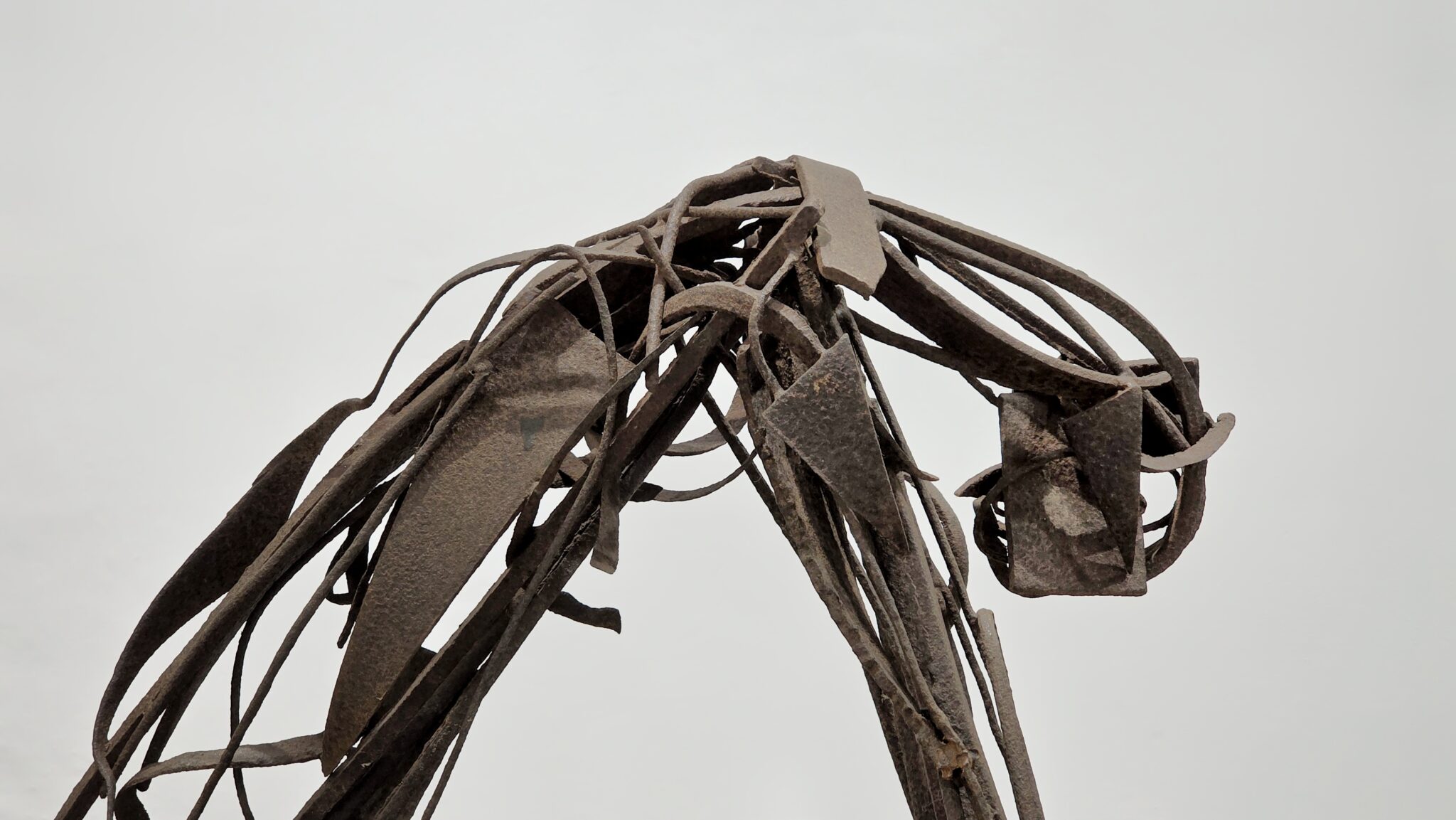
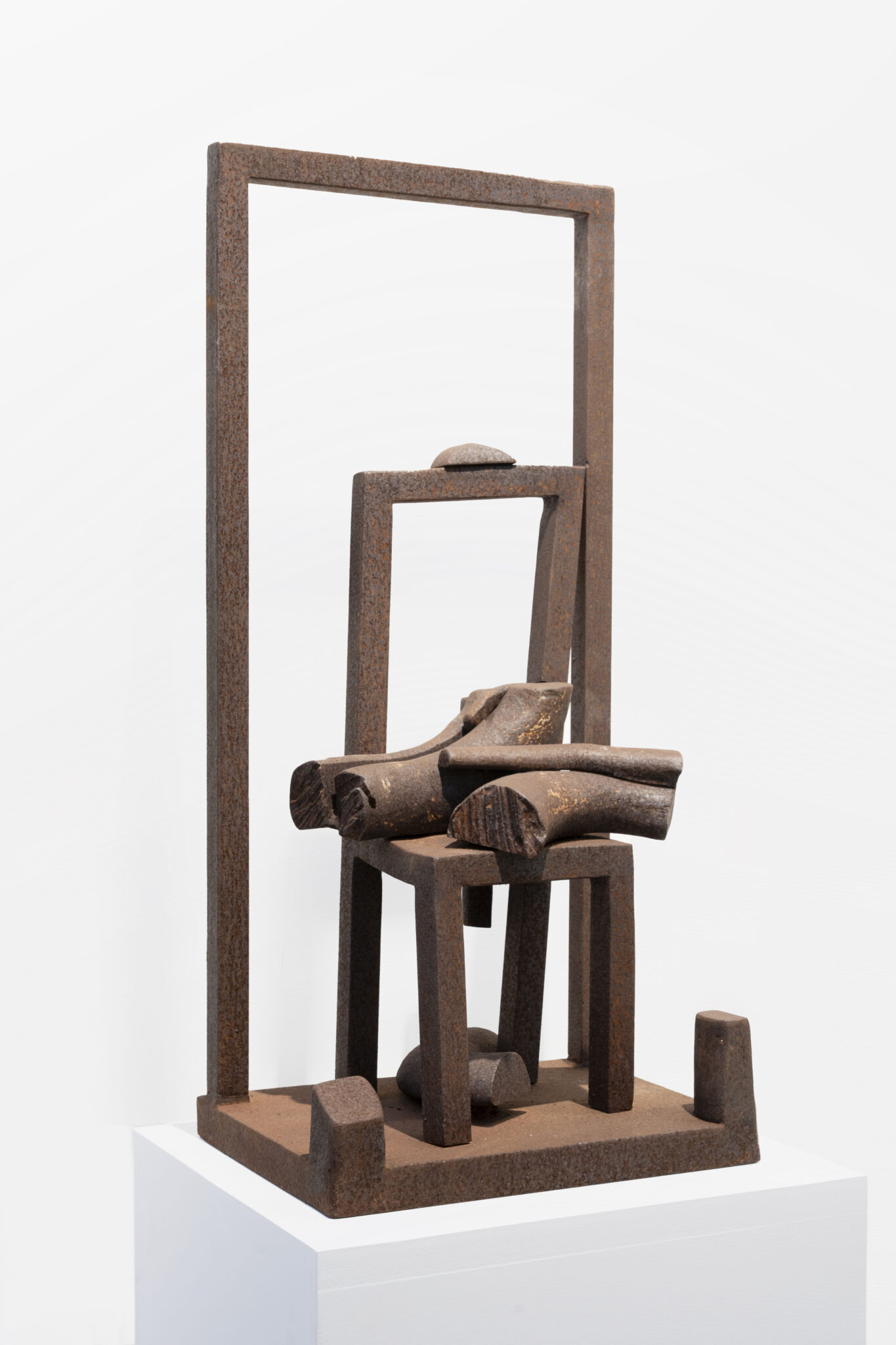
Although most of the iron sculptures exhibited in Dialogues with Vulcan belong to the last decade of his work, we have chosen to include some pieces that take us back to the early stages of his dialogue with the material. These early works reference artistic languages (Gargallo, Julio González) with which Abad, not yet twenty years old, identified and began to recognise himself. Pensador (‘Thinker’ – 1961) and Tauromaquia (‘Bullfighting’ – 1962) are key works from the dawn of Abad’s sculptural career. The economy of materials, combined with assembly and recycling—using metal scraps and waste collected from local workshops—provided the humble means to achieve maximum expressive intensity. In Pensador, he creates a body formed by rusted lines, resembling a three-dimensional drawing, while the eight variations that make up Tauromaquia are approached as a model building kit with pieces of welded iron, evoking the figure of the bull in different forms. The works in this preliminary series were painted black, incorporating this material element into his sculpture, a practice that would continue for over a decade. He eventually abandoned it after the exhaustive and striking experience of Homenaje al Barroco (‘Homage to the Baroque’) and its extensive follow-up, including large altarpieces (Adeje, 1979; Tuineje, 1981, etc.). This entire body of work was created using wood and recycled objects, all painted entirely black. This legendary installation exhibition was first presented in 1978 in Madrid at the Glass Palace, and in the following years it toured various national and international galleries, art fairs (FIAC, ARCO), and culminated in 1982 with his participation in the Spanish pavilion at the XI Venice Biennale.