Decolonising the skin: textures of care
Cecilia González Godino
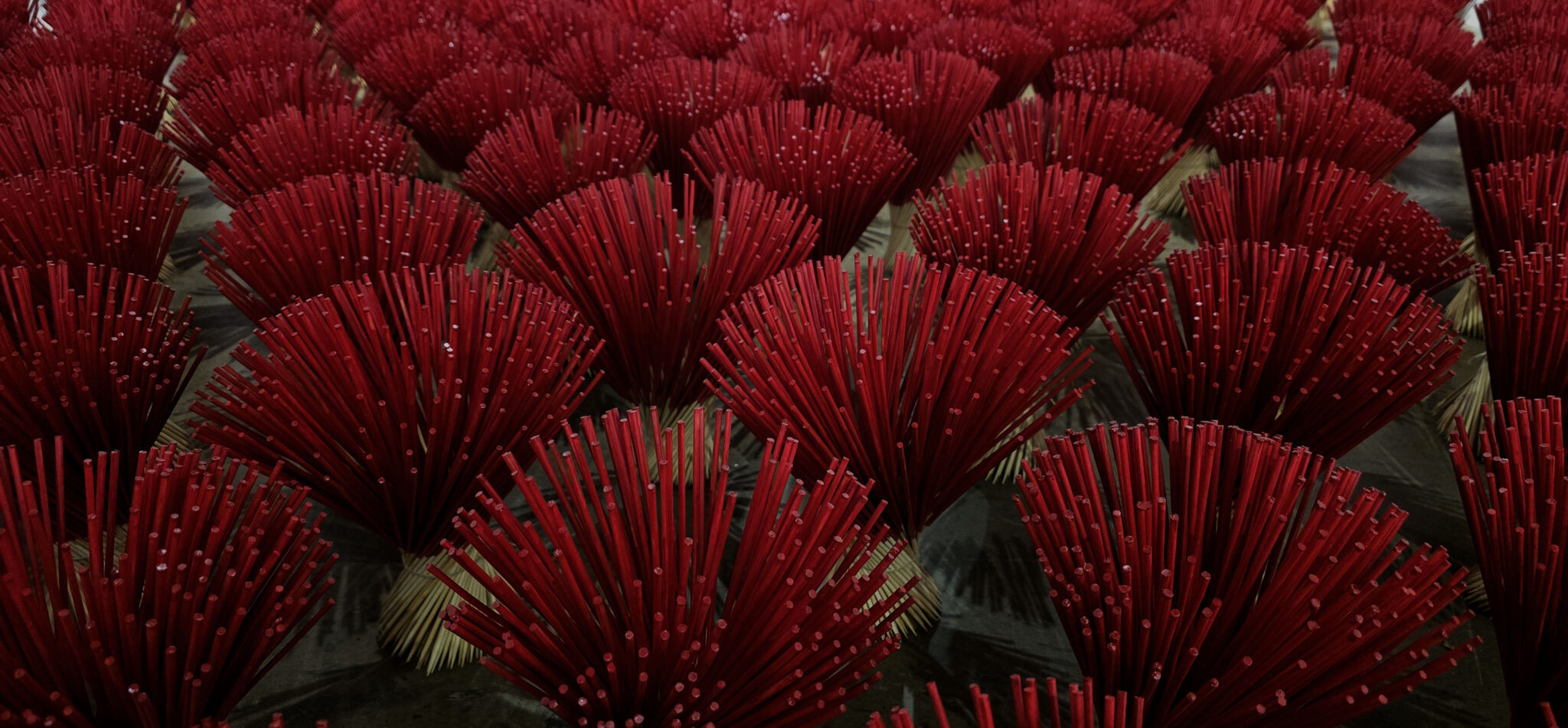
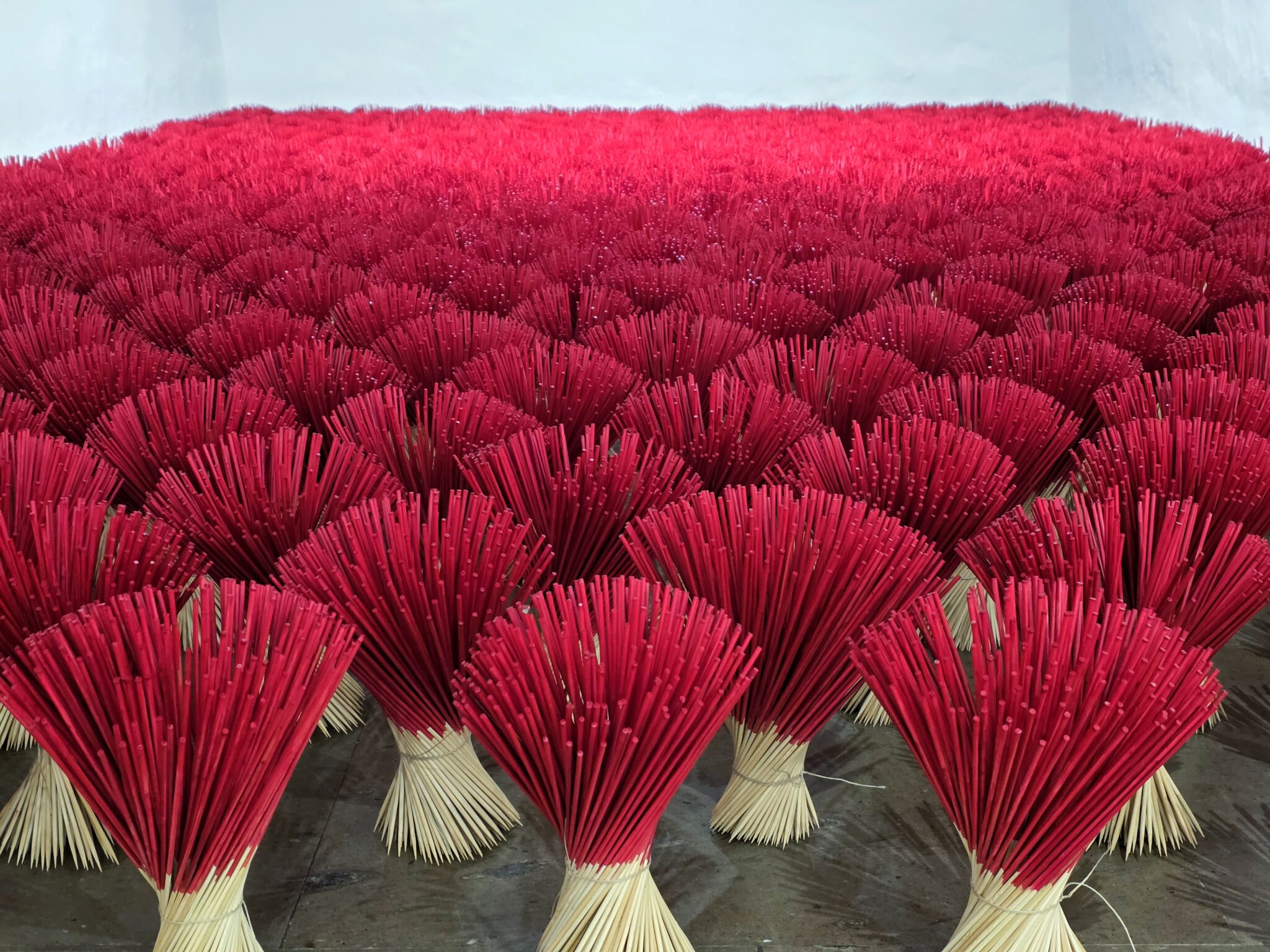
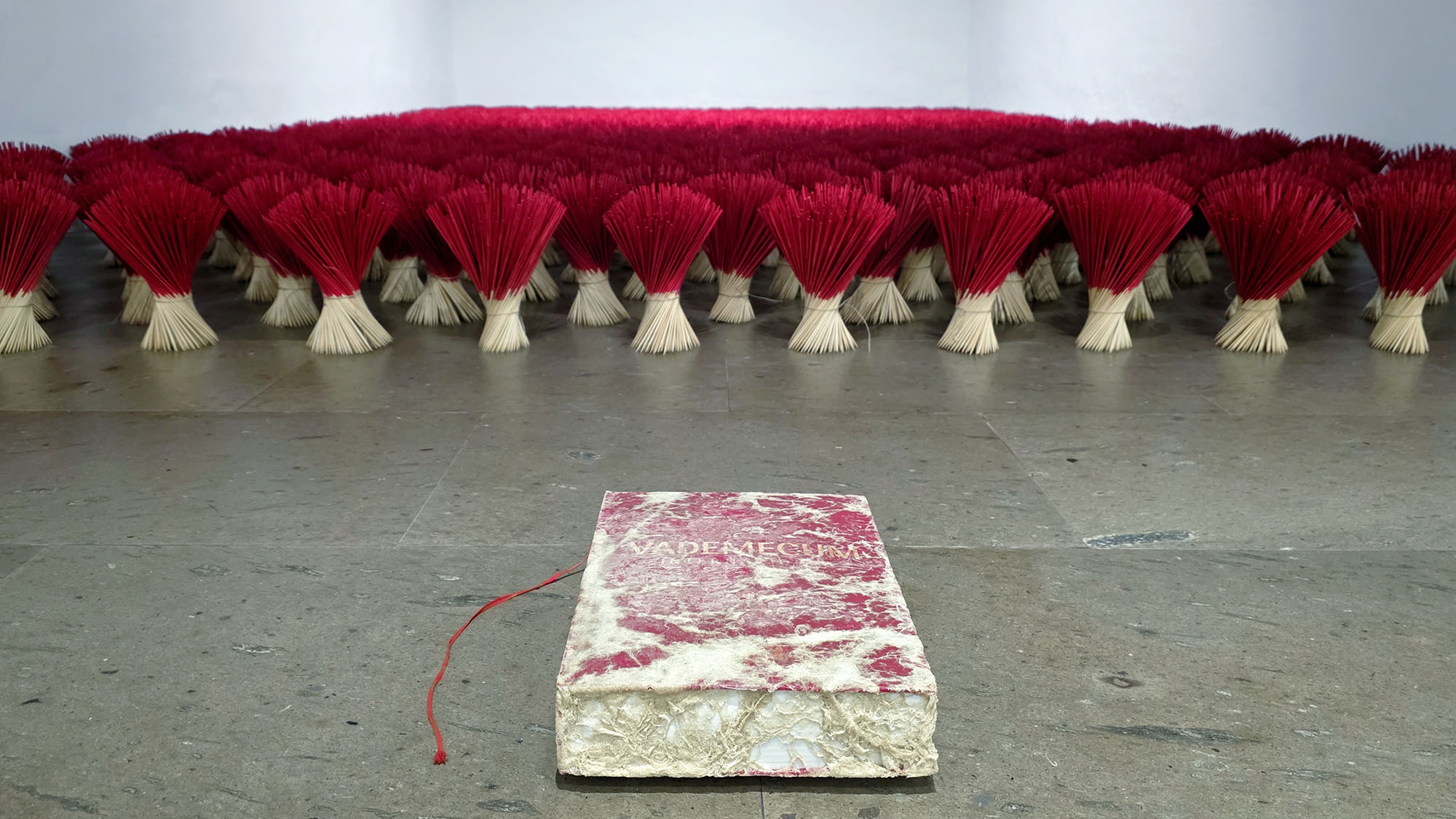
One hundred thousand incense sticks emerge from the back of the gallery like a splintered horizon. Orange blossom—the essence of joy, says Romina Rivero—unfolds its promise of wordless healing, operating on levels where language fails. This peak installation is not only visual but also olfactory, tactile and memorial: an invocation of ancient pharmacopoeias that pharmaceutical capitalism tried to erase when it decided that only that which is synthesisable in the lab deserved the status of medicine. Acetylsalicylic acid replaced the weeping willow, ushering in an epistemic regime where nature had to be translated, appropriated, patented.
This exhibition emerges through one unsettling question: Where does the body go when its systematic intervention has been authorised? Rivero, a visual and medical artist, inhabits that productive tension between art and science, between the scalpel and the paintbrush, questioning how modern medicine, as a biopolitical exercise, has shaped bodies from the outside.[i] Bodies disciplined by clinical protocols, classified by diagnoses, judged for their deviation from the norm. Feminised bodies that have historically been a territory of colonial experimentation, from the Inquisition and the burning of healers accused of witchcraft to contemporary policies that medicalise difference. Silvia Federici reminds us that the witch hunt was, above all, an epistemological dispossession: the systematic elimination of female medicinal knowledge that threatened the emerging monopoly of institutional medicine.[ii]
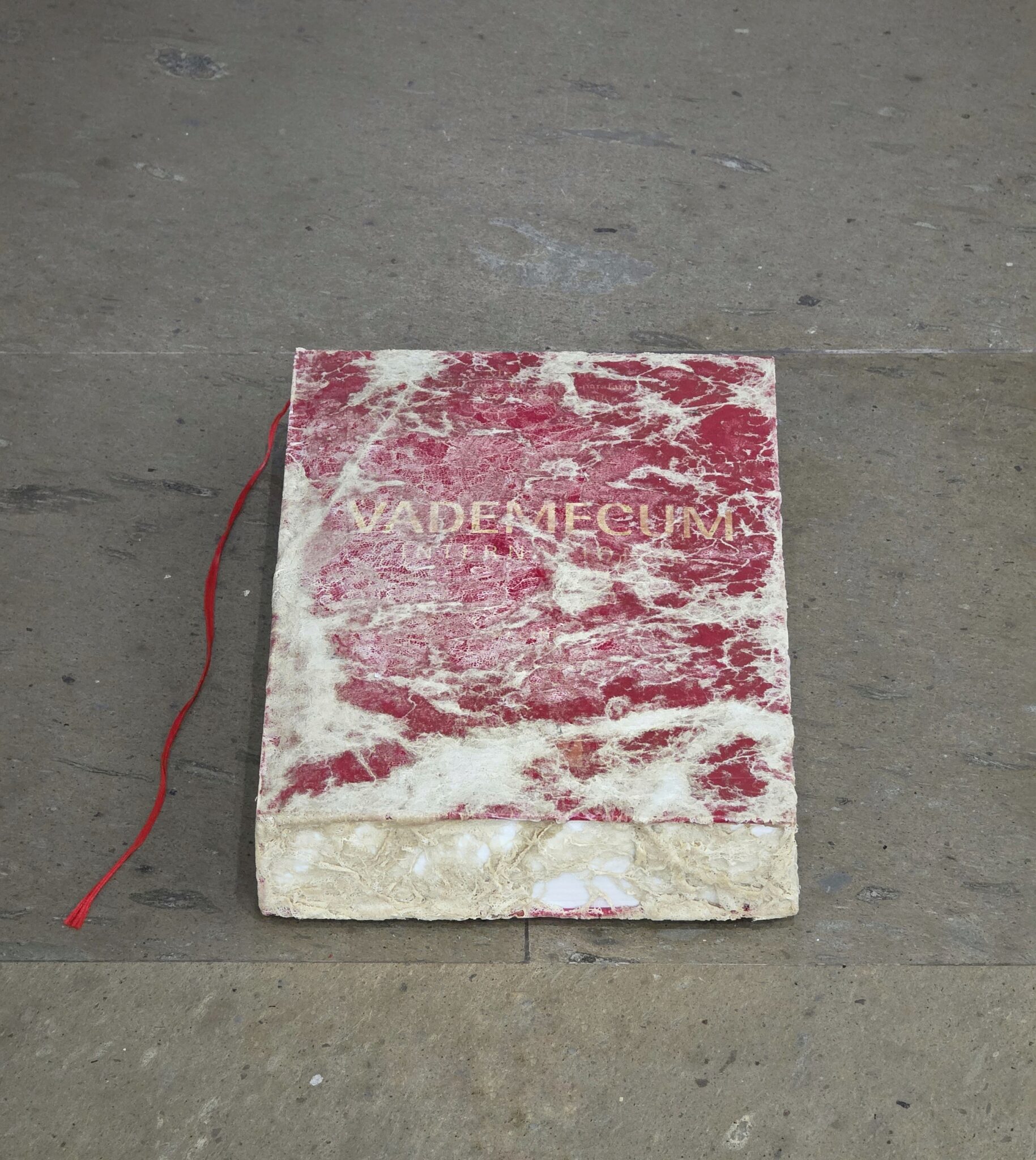
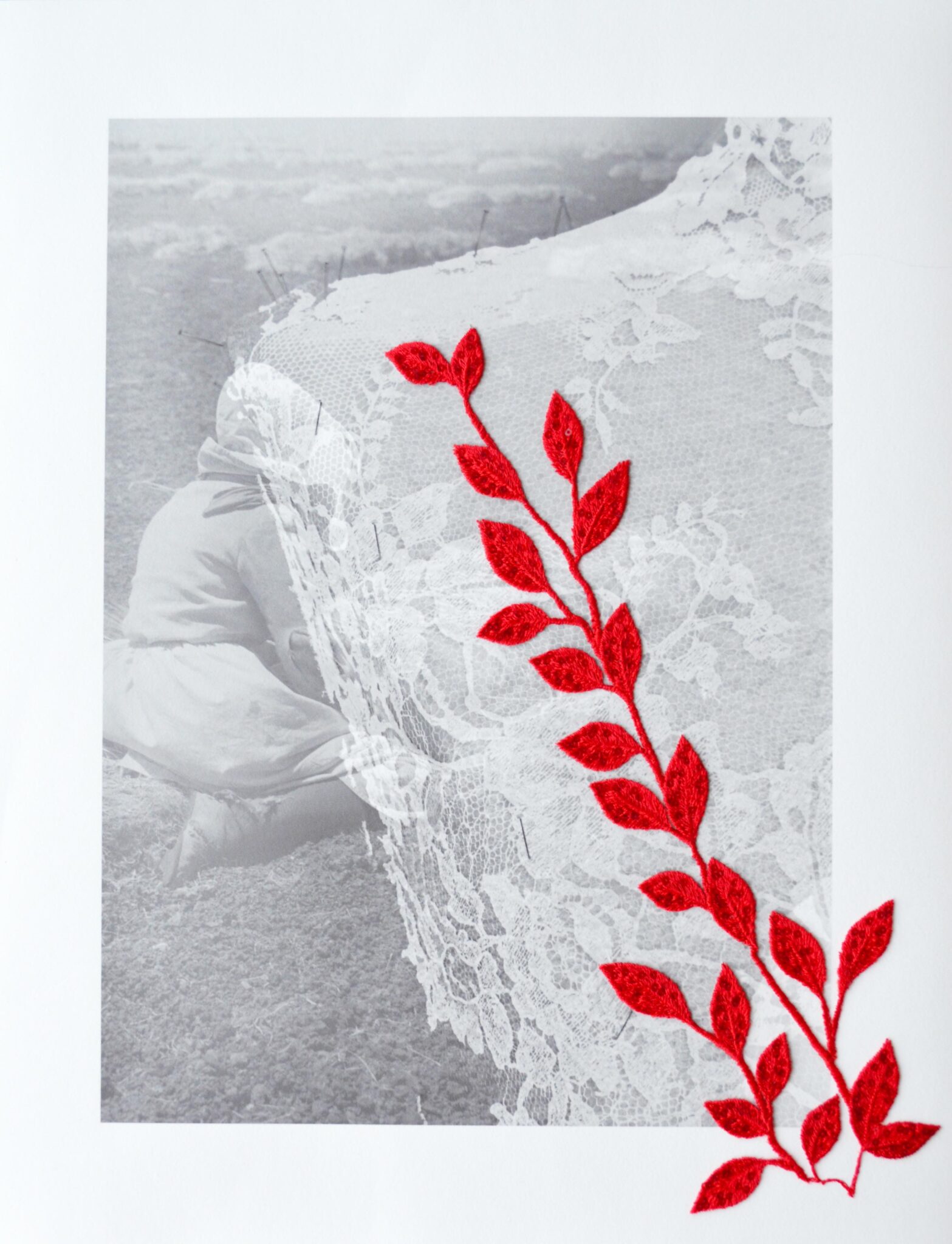
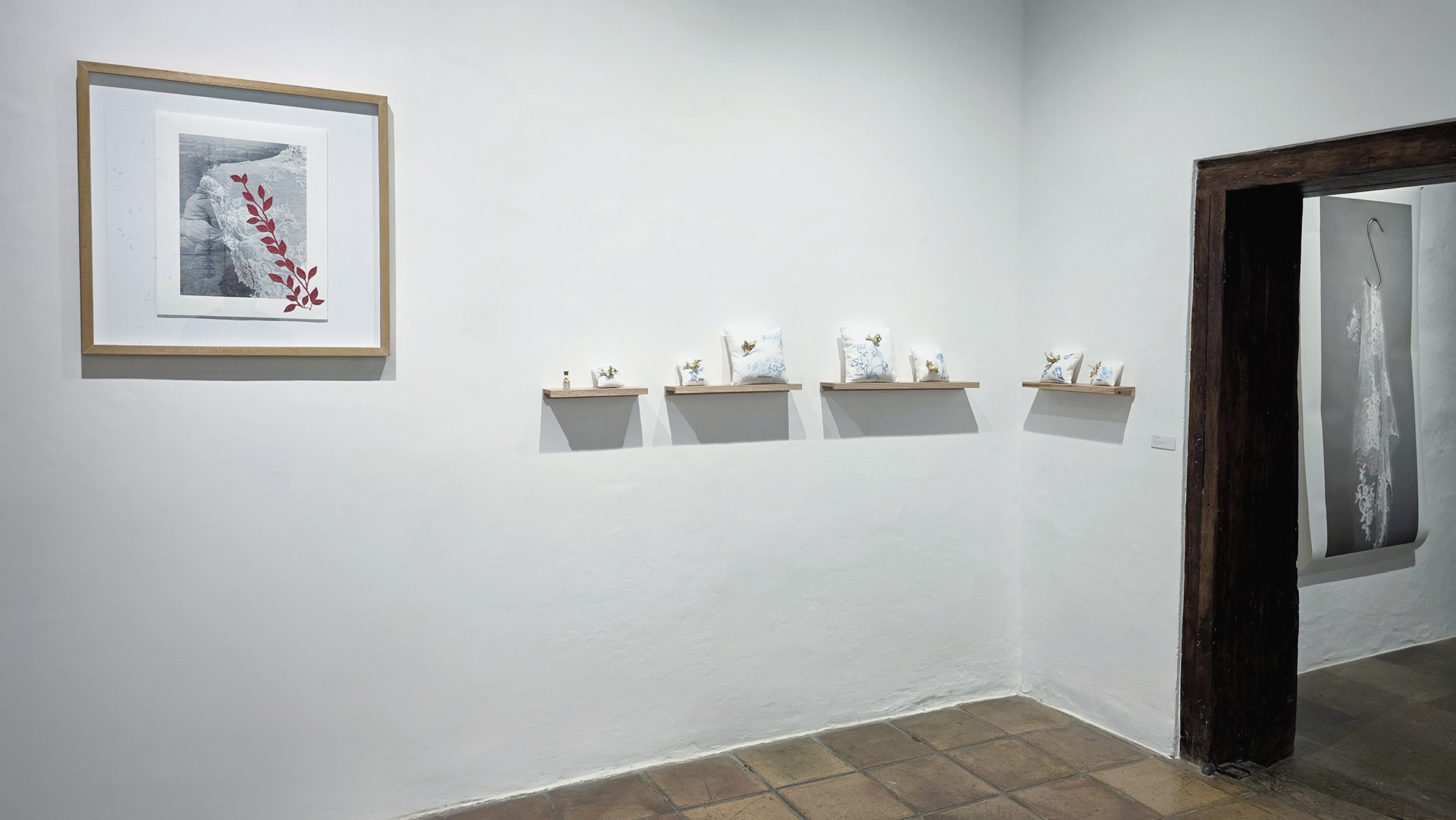
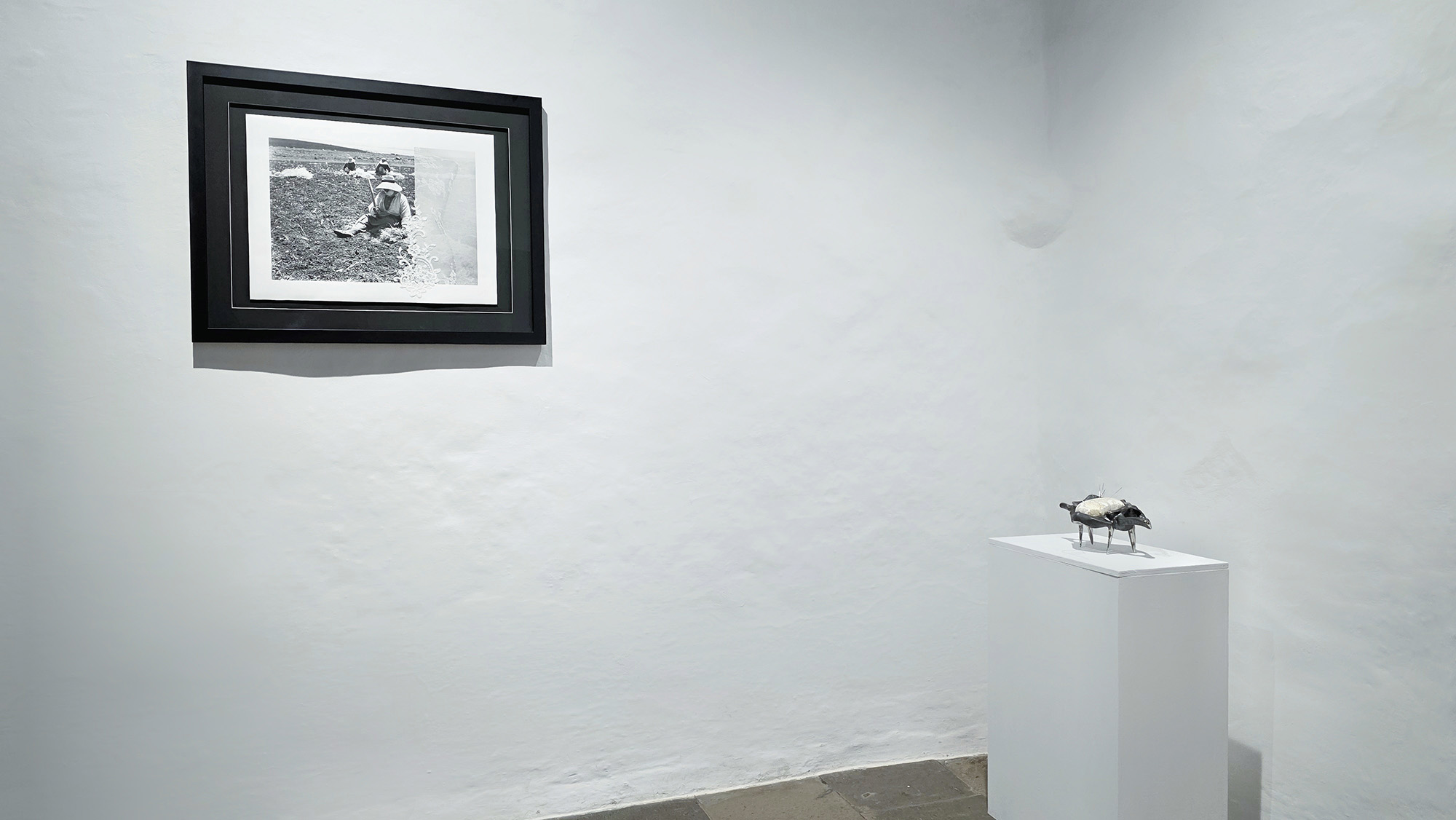
In Decolonising the Skin, that gesture materialises in a vademecum—a contemporary pharmacological bible—that Rivero seals and metamorphoses with veils, flowers, cotton and natural fibres. The closed book is also a shrouded body, an ancient pharmacopoeia that no longer speaks but whose presence persists. Accompanied by archive photographs from the TEA Documentation Centre: humble Canarian women adorned with lace, the product of women’s work which now serves as a poetic suture between past and present.
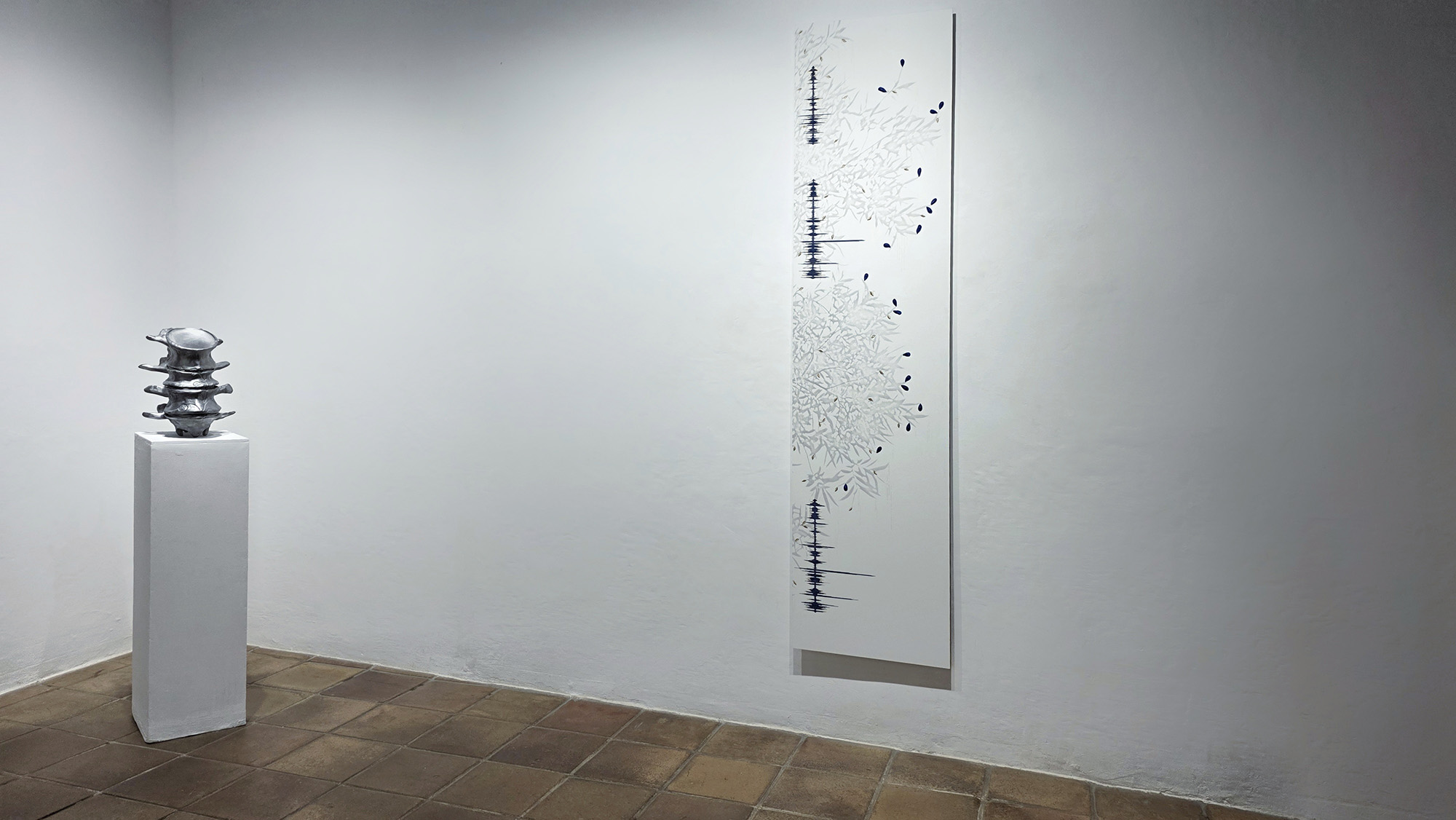
The Canary Islands emerge in this exhibition not as a landscape but as a laboratory. Françoise Vergès has theorised how colonised territories function as spaces of experimentation where control techniques are tested and later exported to the metropolis.[iii] But the Canary Islands are also a place of resistance: here, healers persist, practising traditional healing methods to address fright, crying, sorrow and distress. Handmade Japanese panels reproduce a graphic recording of the sound of one of those common prayers, tracing in cobalt blue and gold—medicinal chromatics, pigment of the sacred—fragments of the Universal Declaration of Human Rights that are read as prayers to the common.[iv] The words float alongside the sound recording as if both—the legal document and the oral practice—could share the same status, the same legitimacy.
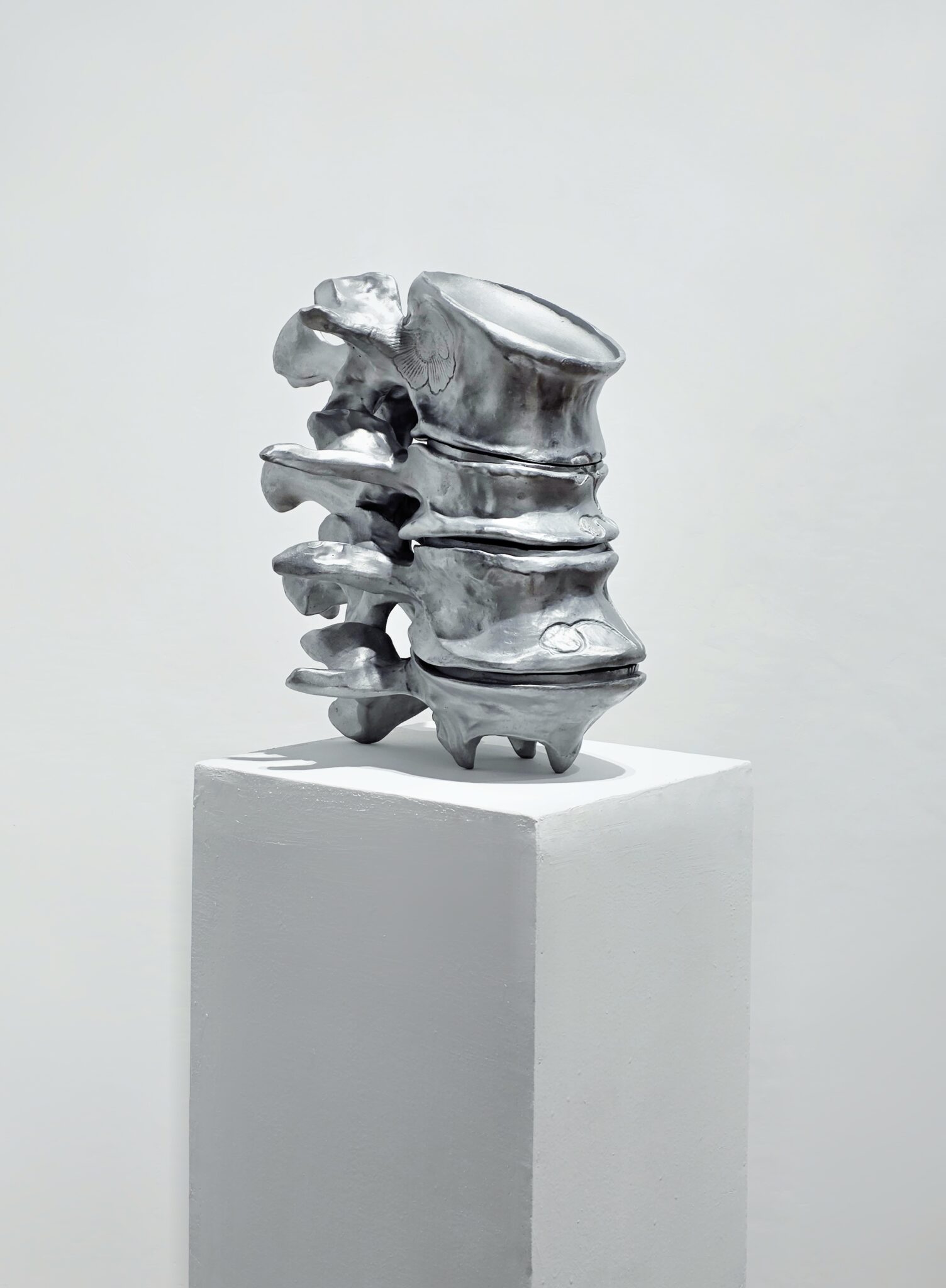
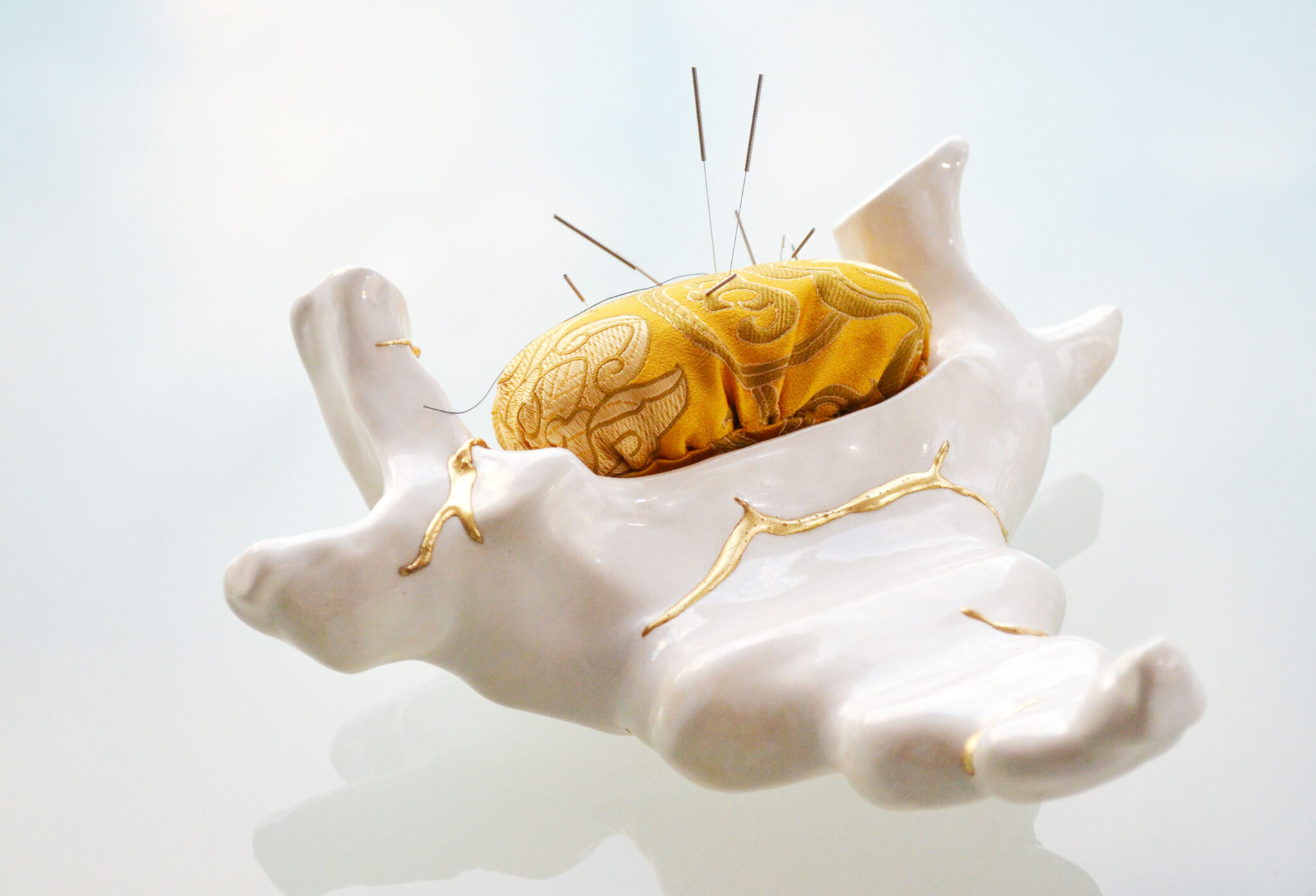
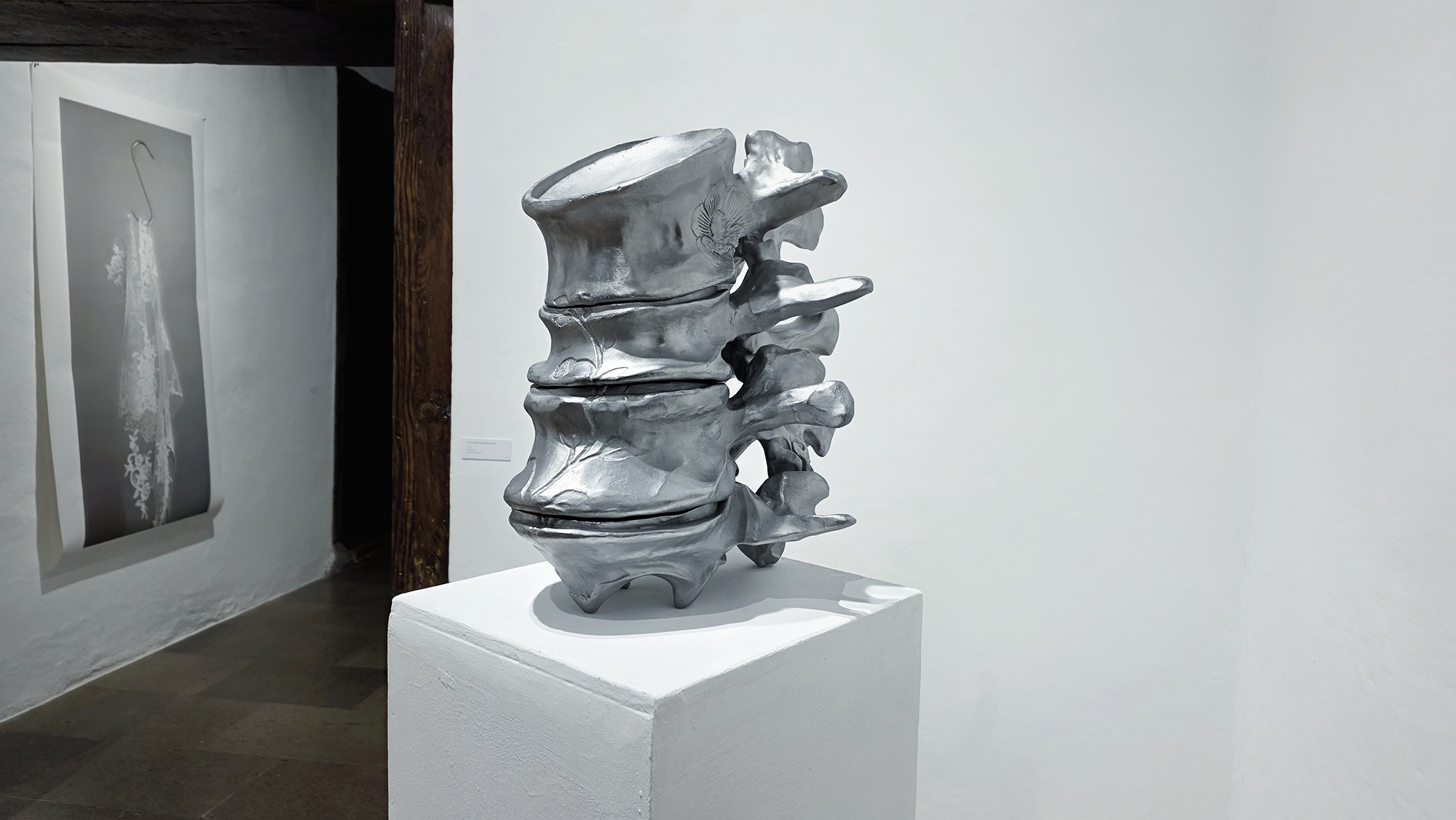
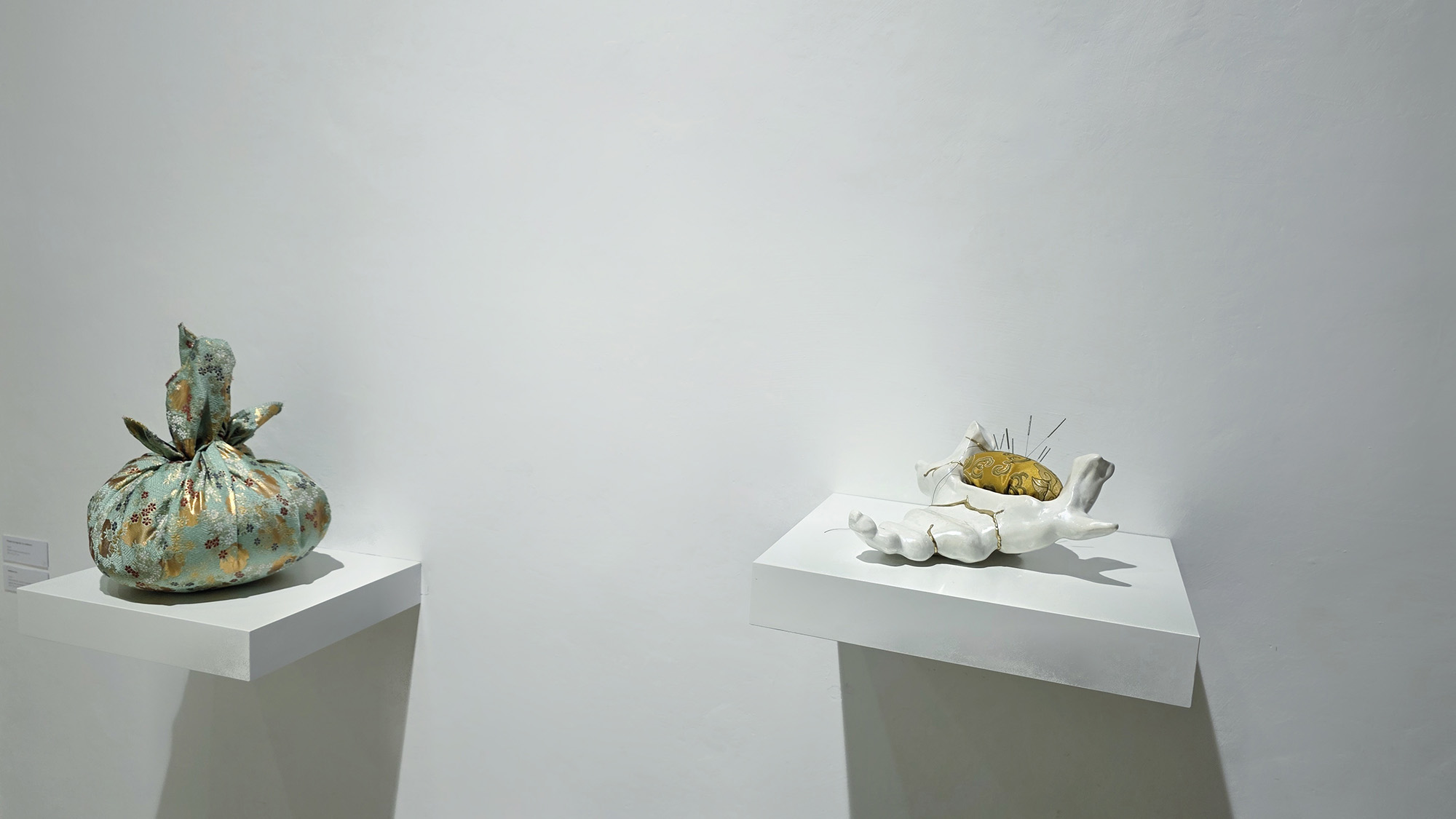
Materiality in Rivero is form and knowledge. The mother-of-pearl that enamels the broken and reassembled vertebrae is simultaneously fragility and repair. Gold leaf dignifies the broken without denying it, suggesting that the scar is not only beauty but also a law of life. A looping video shows a vertebra fracturing and uniting eternally, while the sculpture cast in aluminium—a lunar, feminine metal, cold but not hostile—suggests a structural lightness, a support for standing without becoming a shell. Rivero responds to the regimes that chemically modulate our emotions with an alternative pharmacy composed of Canarian poppies, weeping willows, and textures that propose other chemical care.[v]
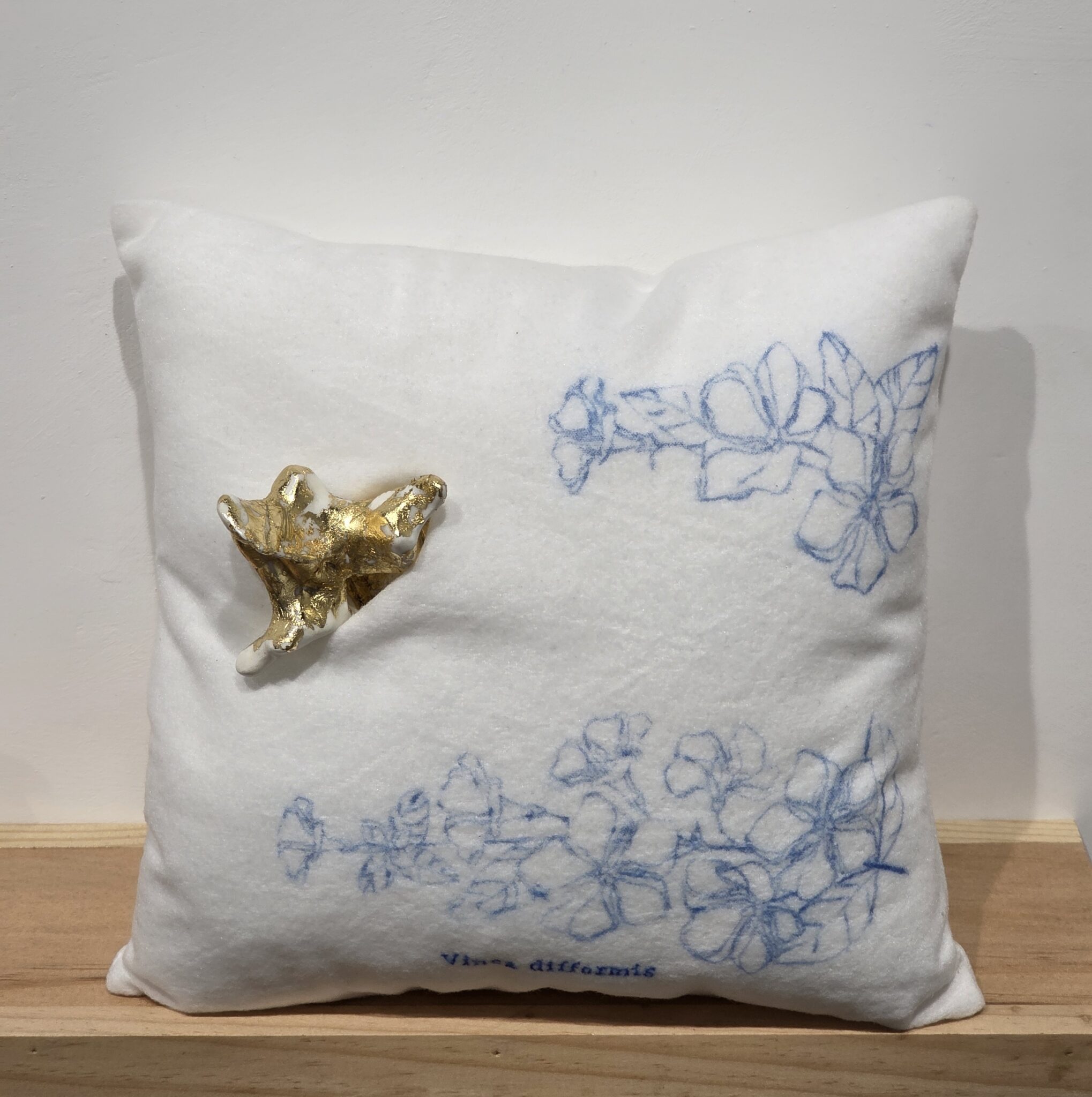
In Ginger Jars, seven white cushions mediate between the collective and the personal, each one holding a different medicinal plant and supporting what needs to be accompanied before it can be released: humiliation, rejection, betrayal, abandonment, injustice. Resting, lamenting, yearning, inhabiting domestic pain… gestures that exist outside institutional capture and operate where modern medicine cannot encode or monetise. They are fleeting acts of care that refuse to become protocol, that insist on their own legitimacy precisely because the institution has discarded them.[vi] Meanwhile, the fabric and feather matt insists on containing in order to release at the very moment of tying the knot. In the gallery, the solid lightens; the weight of pain is dignified without denying itself.
The distinction between bodies deserving of care and disposable bodies is not natural; it is constructed.[vii] Decolonising the skin proposes a different politics of life: not control exercised by the State or pharmaceutical companies, but the recognition that bodies resist, regenerate not despite their scars but with them. The modern illusion that healing can be controlled solely through external agents—pills, surgeries, interventions—is dismantled here in favour of a more complex understanding: healing is not a procedure; it is about accompanying, traversing, inhabiting pain in its multiple textures.
Materiality is not a support but a condition of possibility: the densities and textures of this exhibition—the softness of cotton, the hardness of mother-of-pearl, the lightness of feather, the coldness of aluminium, the persistence of the aroma—are articulated as a regimen of care. Rivero does not offer miraculous cures but a material vocabulary to think about the body in a different way. A body that is not a repairable machine but a sensitive ecosystem, a territory of memory where the medicinal plant and the mineral coexist, the ancient prayer and contemporary technology, the colonial wound and the always fragile, always necessary possibility of regeneration.

[i]Michel Foucault, The History of Sexuality, Vol. 1: The Will to Knowledge and The Birth of the Clinic.
[ii] Silvia Federici, Caliban and the Witch: Women, the Body and Primitive Accumulation
[iii] Françoise Vergès, A Decolonial Feminism.
[iv] Jacques Rancière, The Politics of Aesthetics: The Distribution of the Sensible
[v] Paul B. Preciado, Testo Junkie: Sex, Drugs, and Biopolitics in the Pharmacopornographic Era
[vi] Fred Moten and Stefano Harney, The Undercommons: Fugitive Planning and Black Study.
[vii] Achille Mbembe, Necropolitics. Judith Butler, Bodies That Matter: On the Discursive Limits of ‘Sex’.