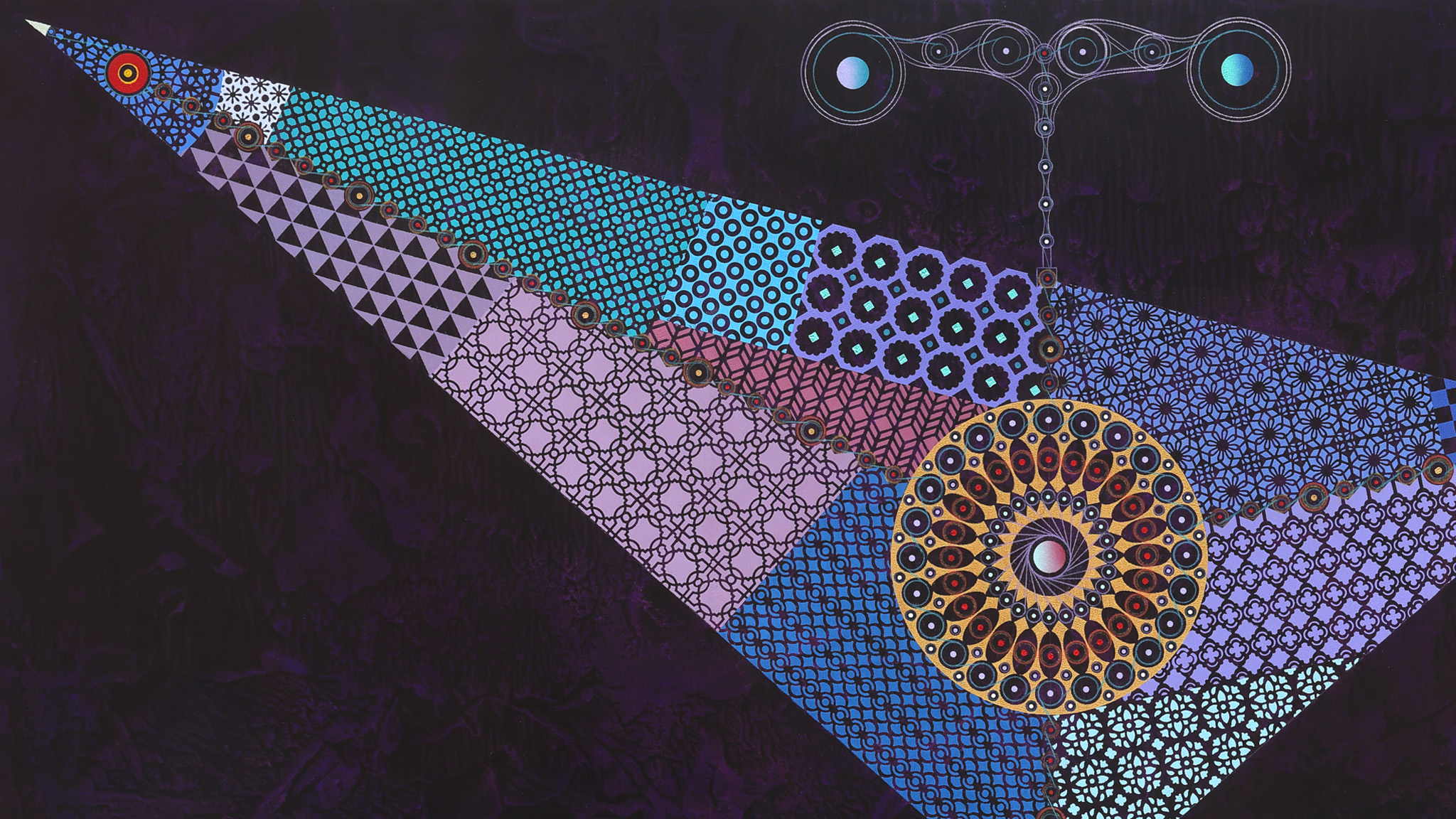
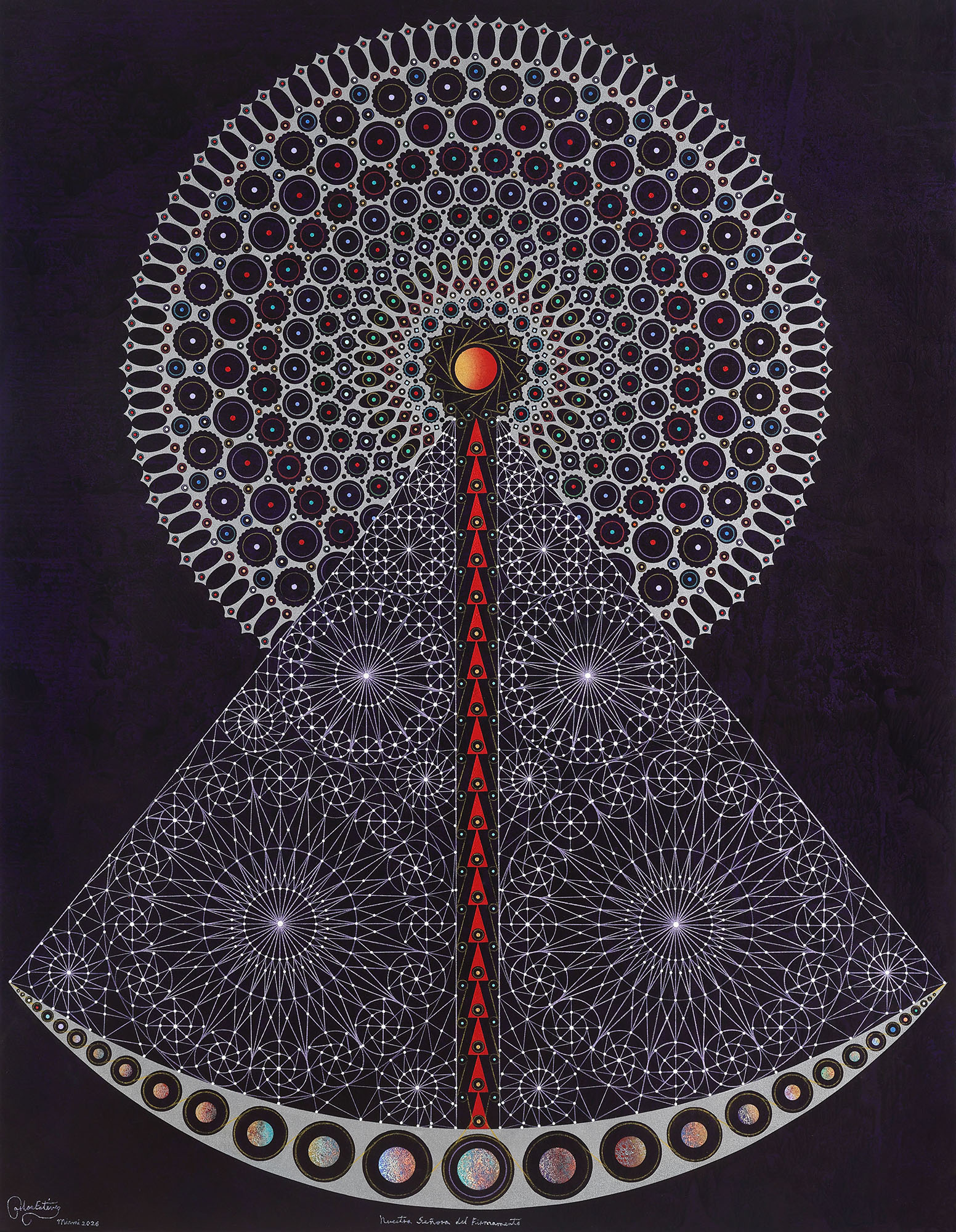
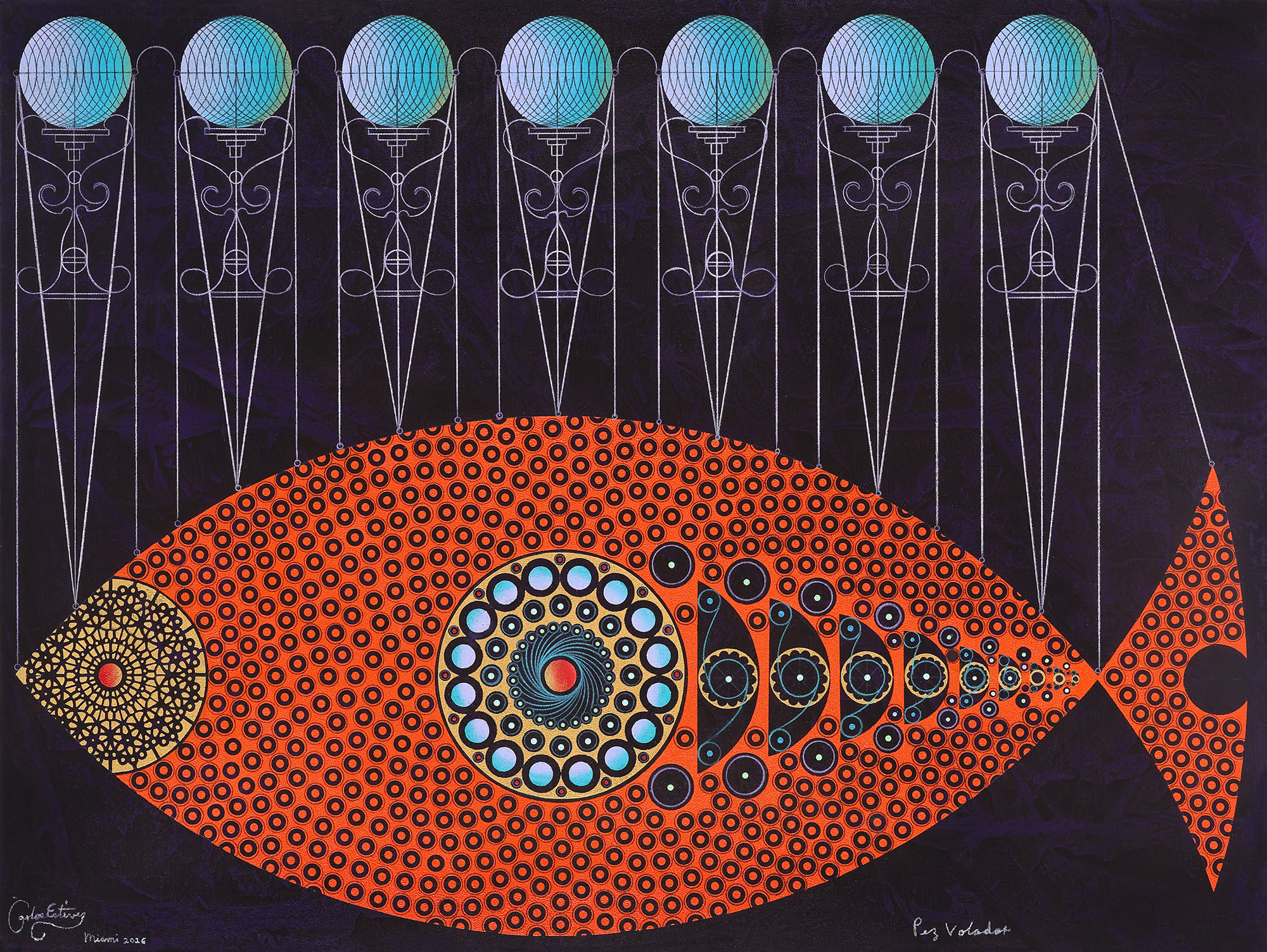
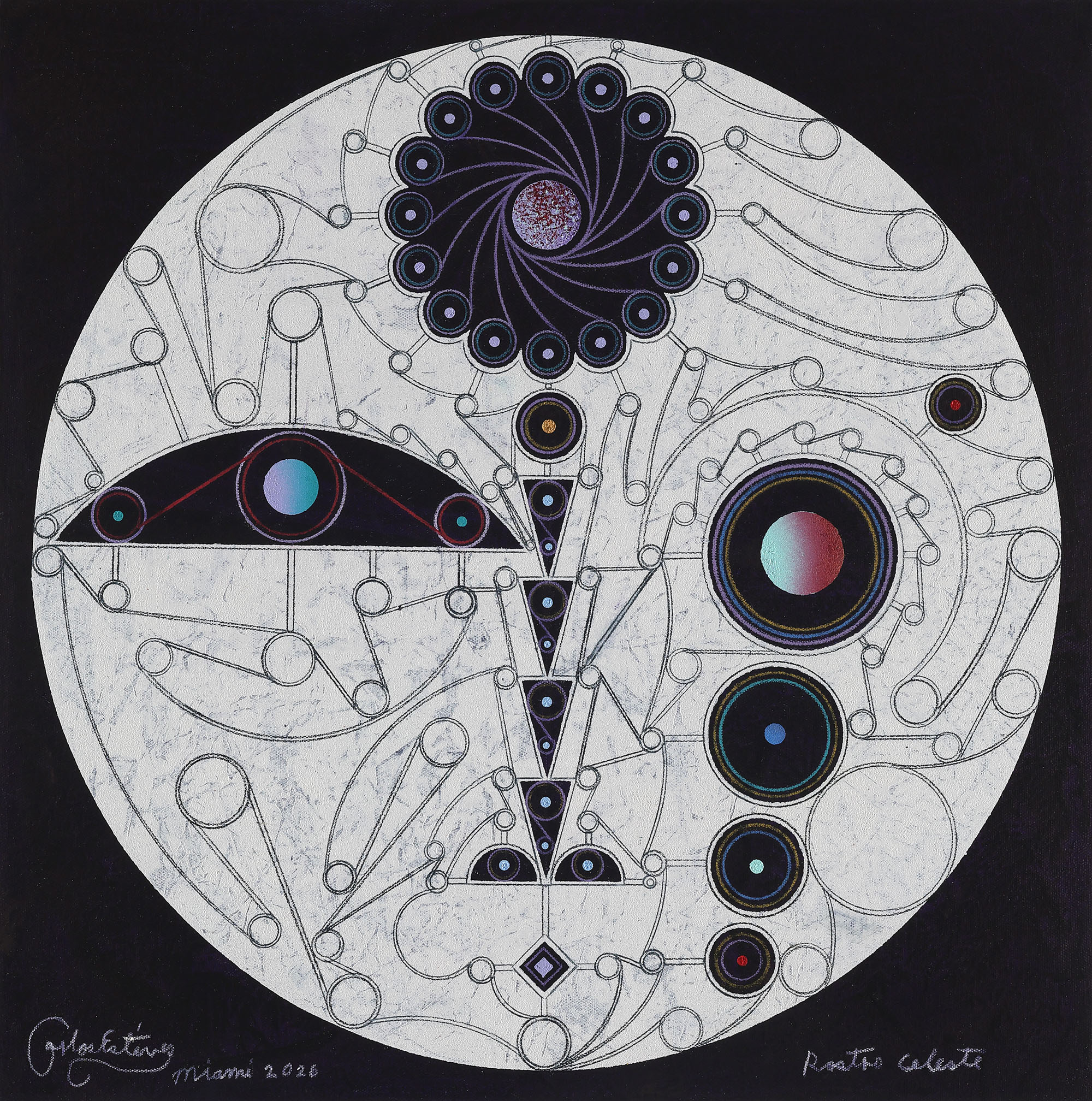
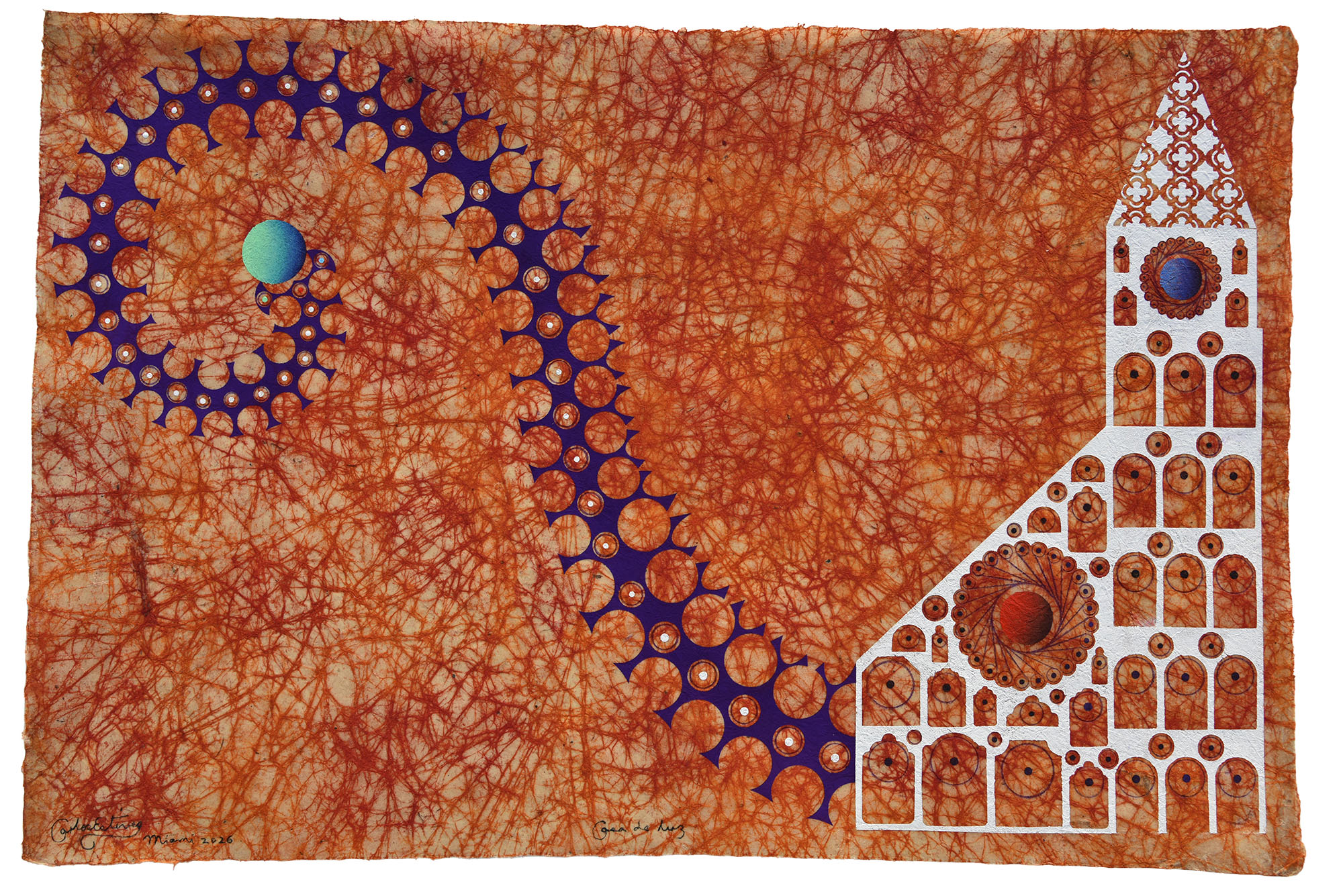
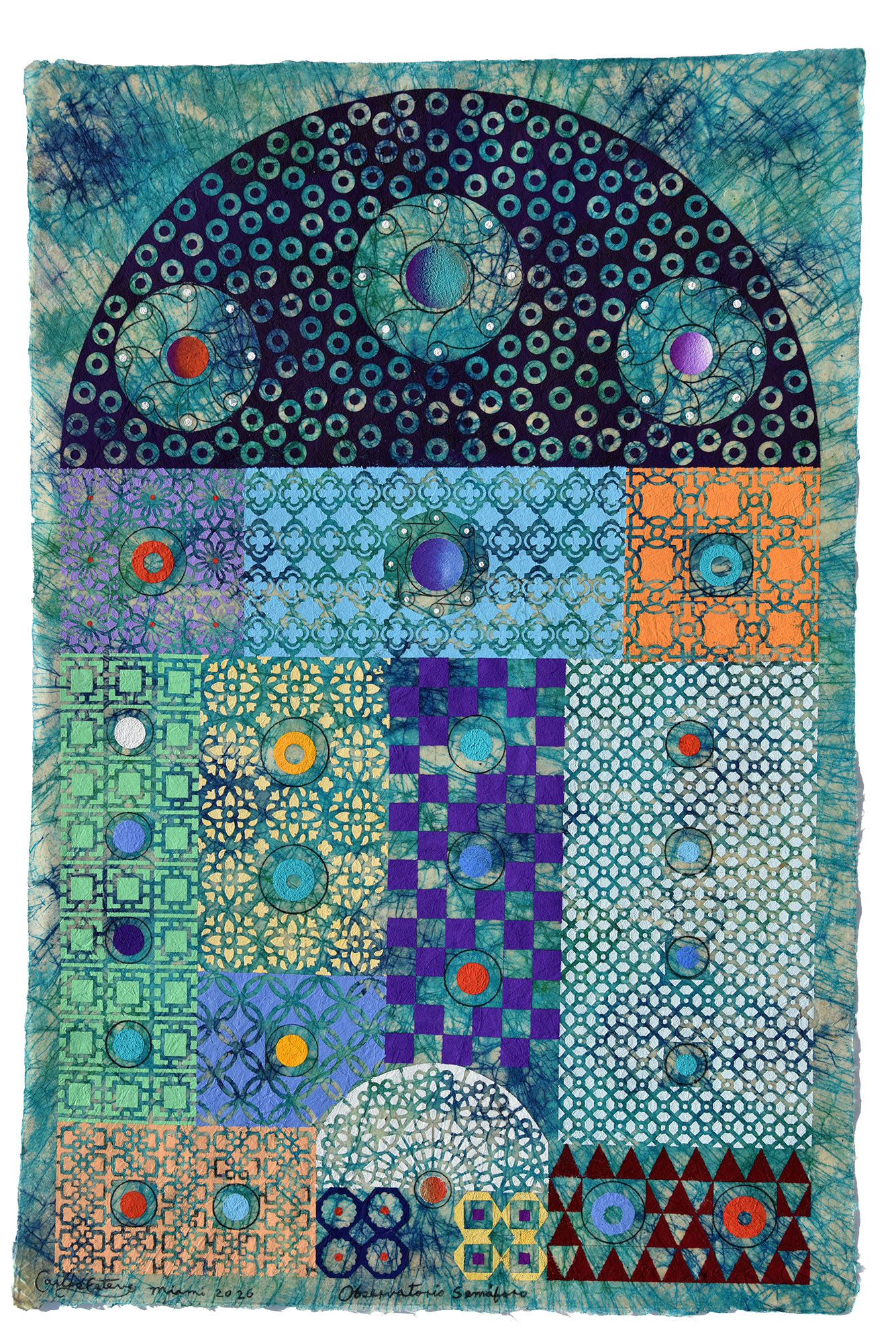
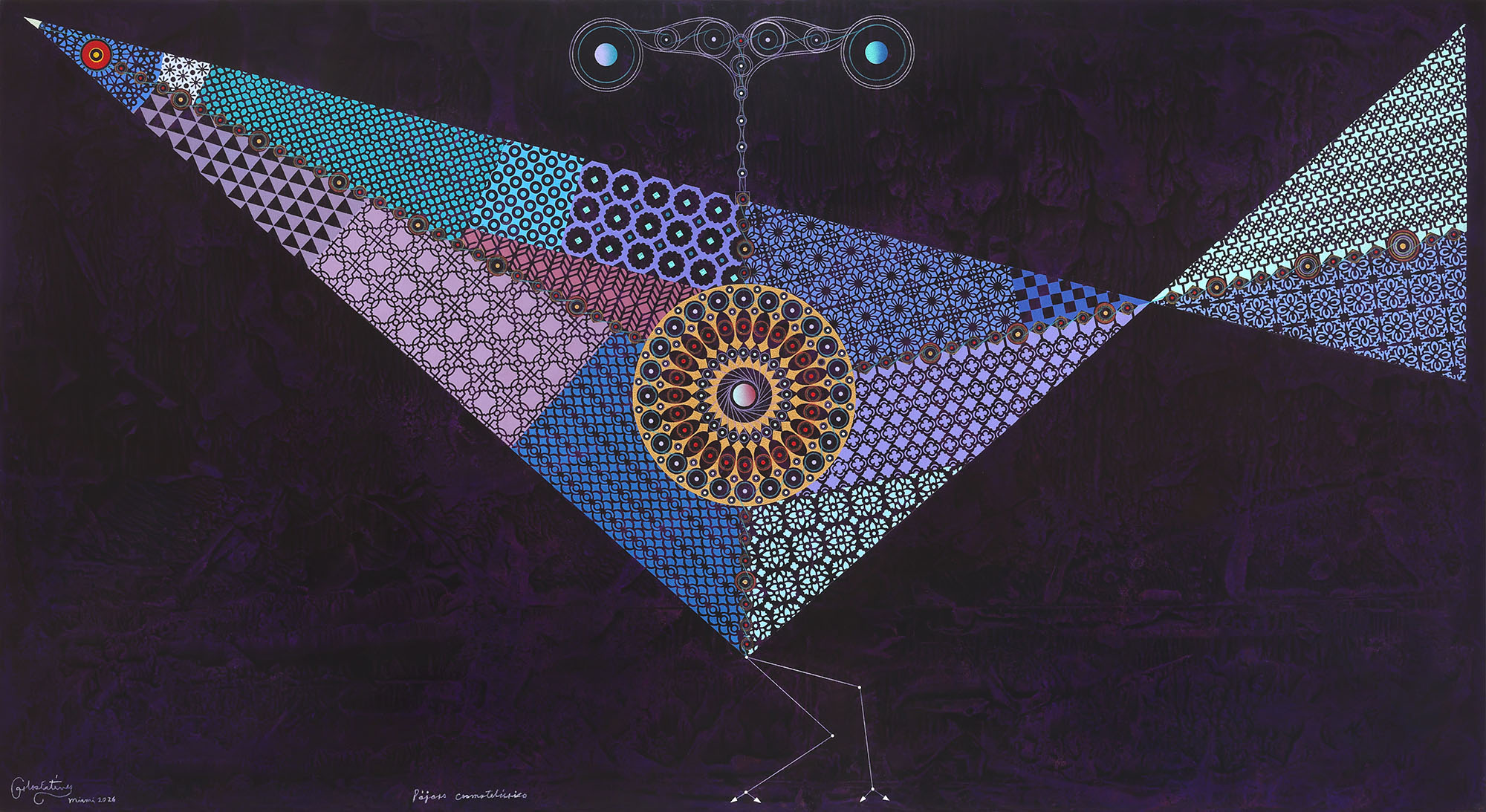
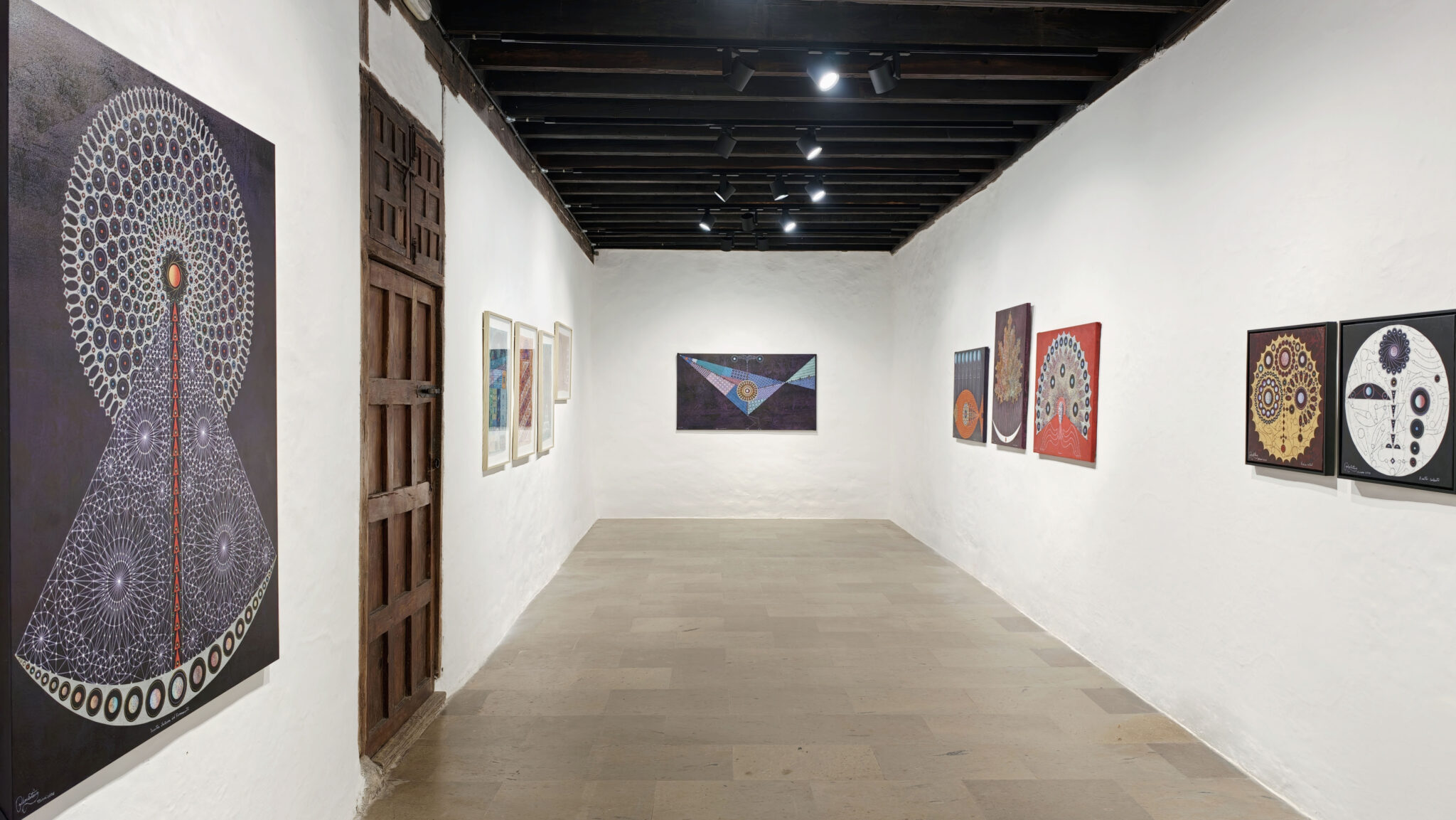
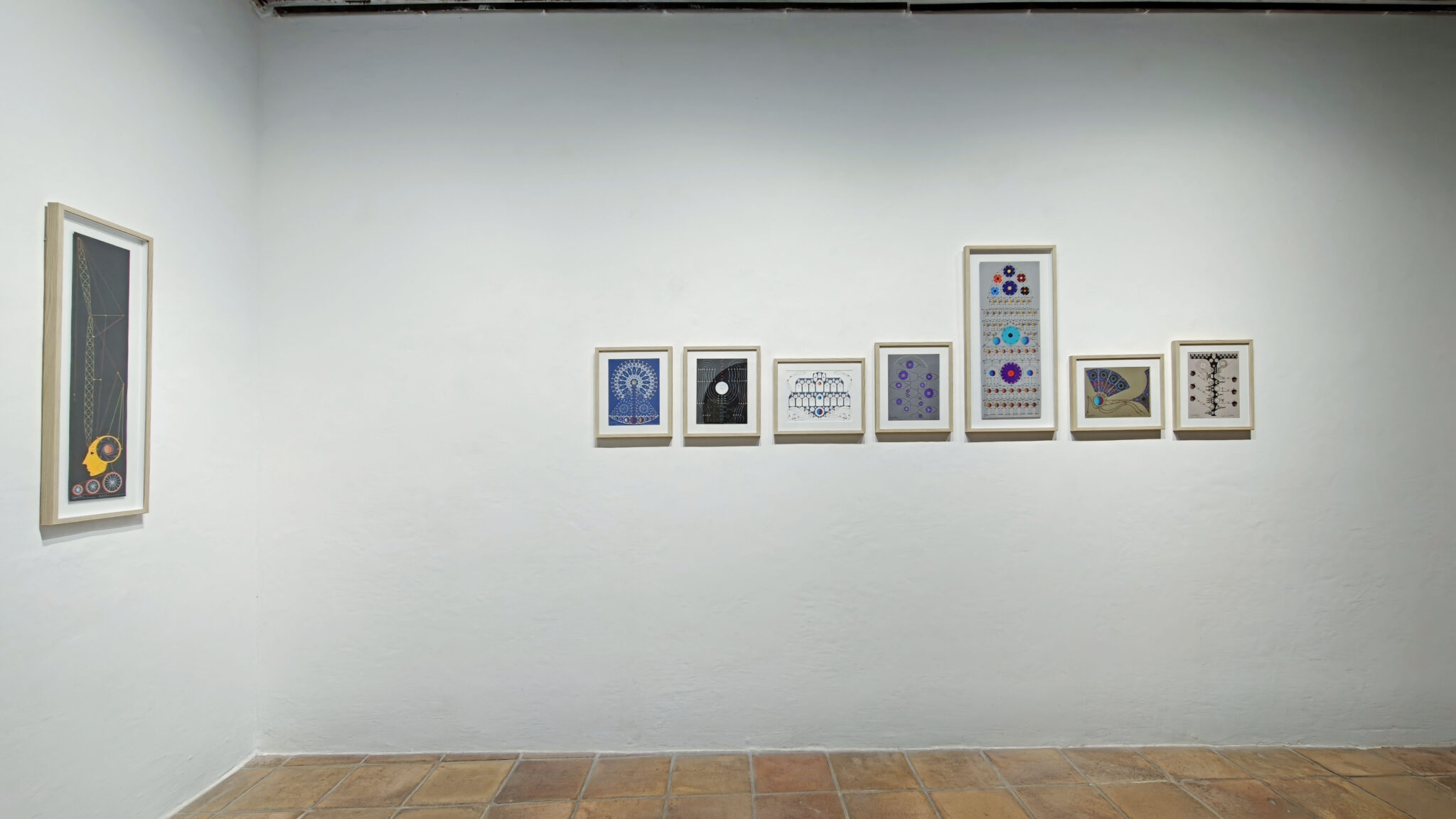
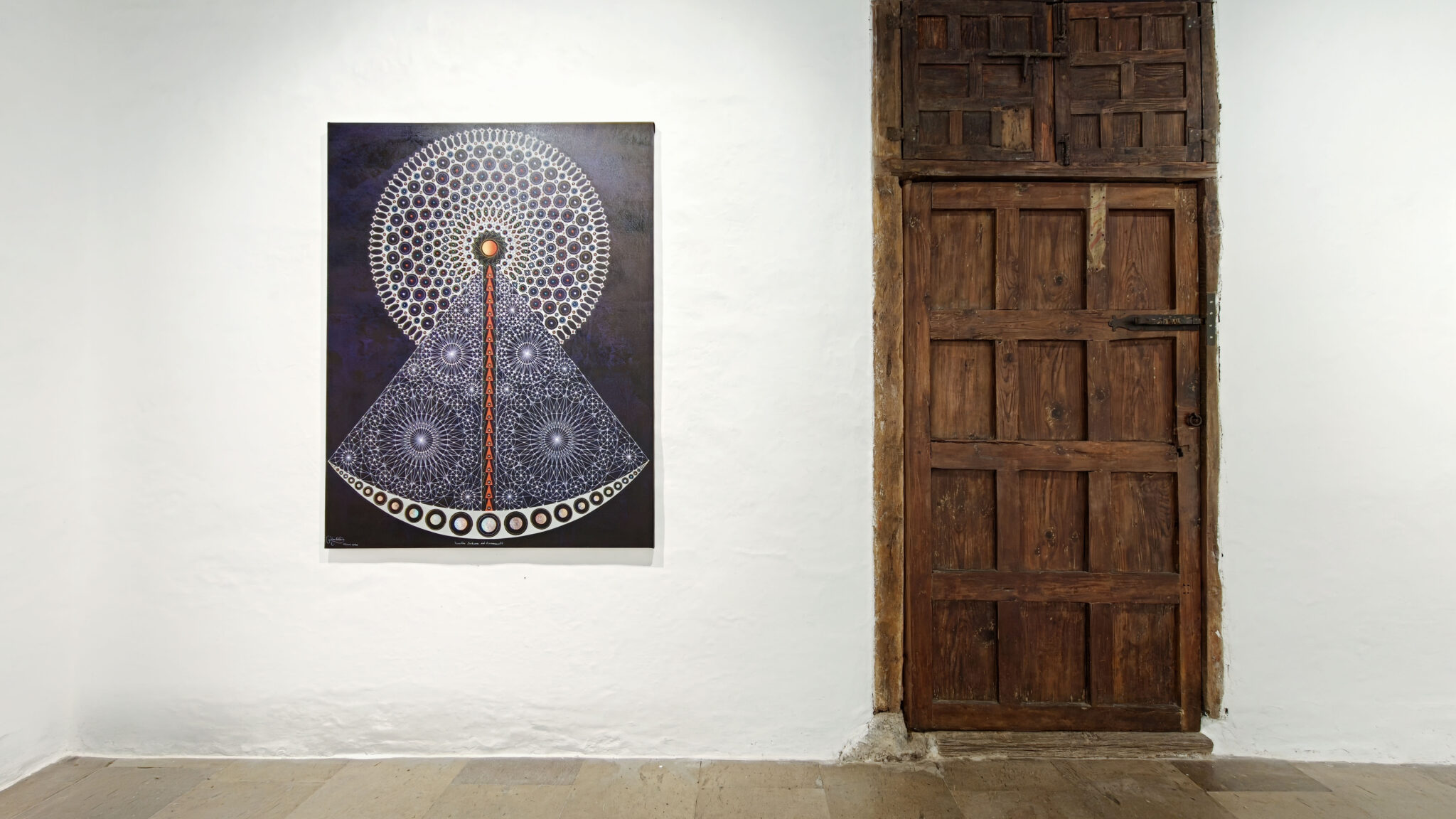
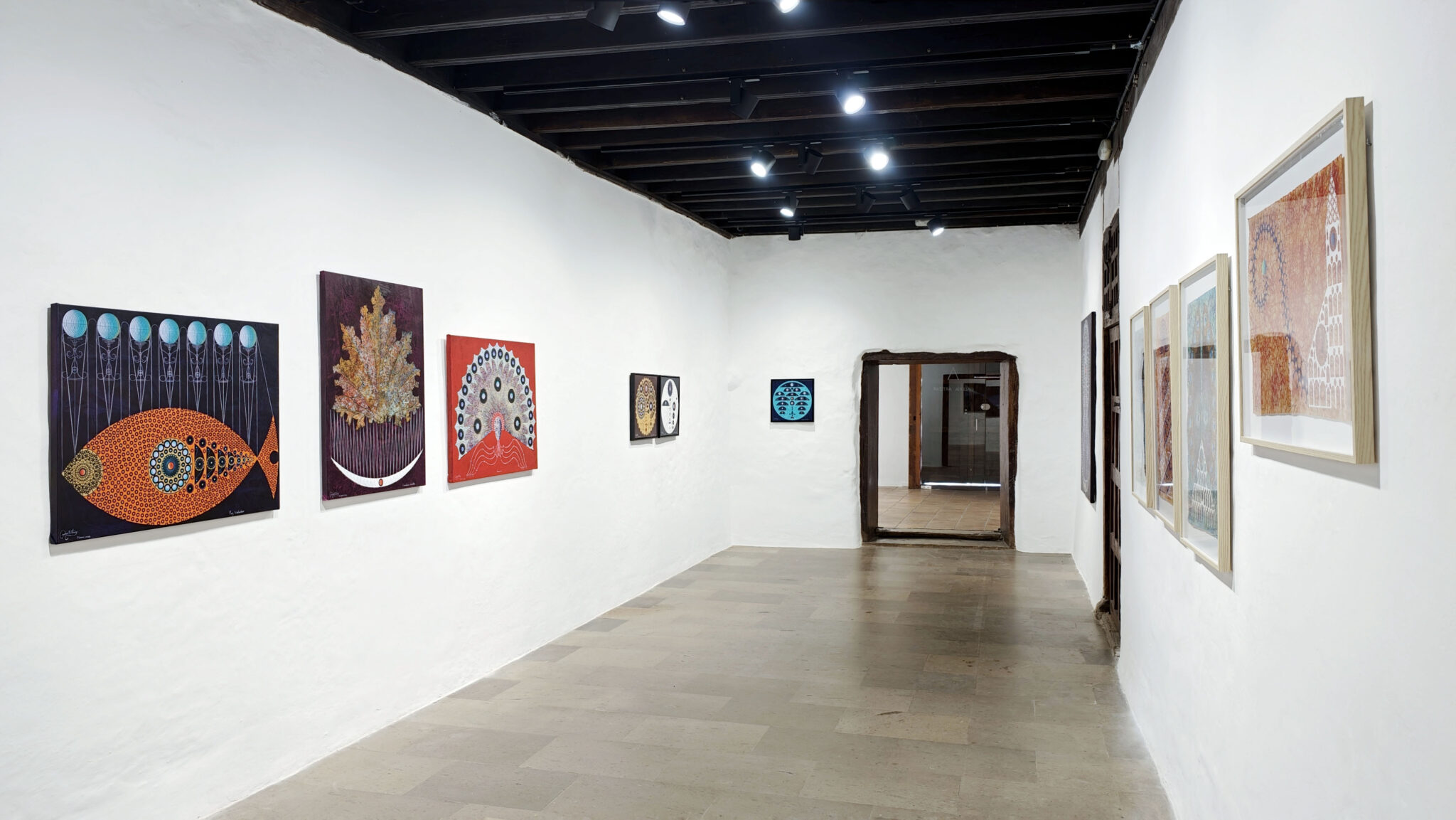
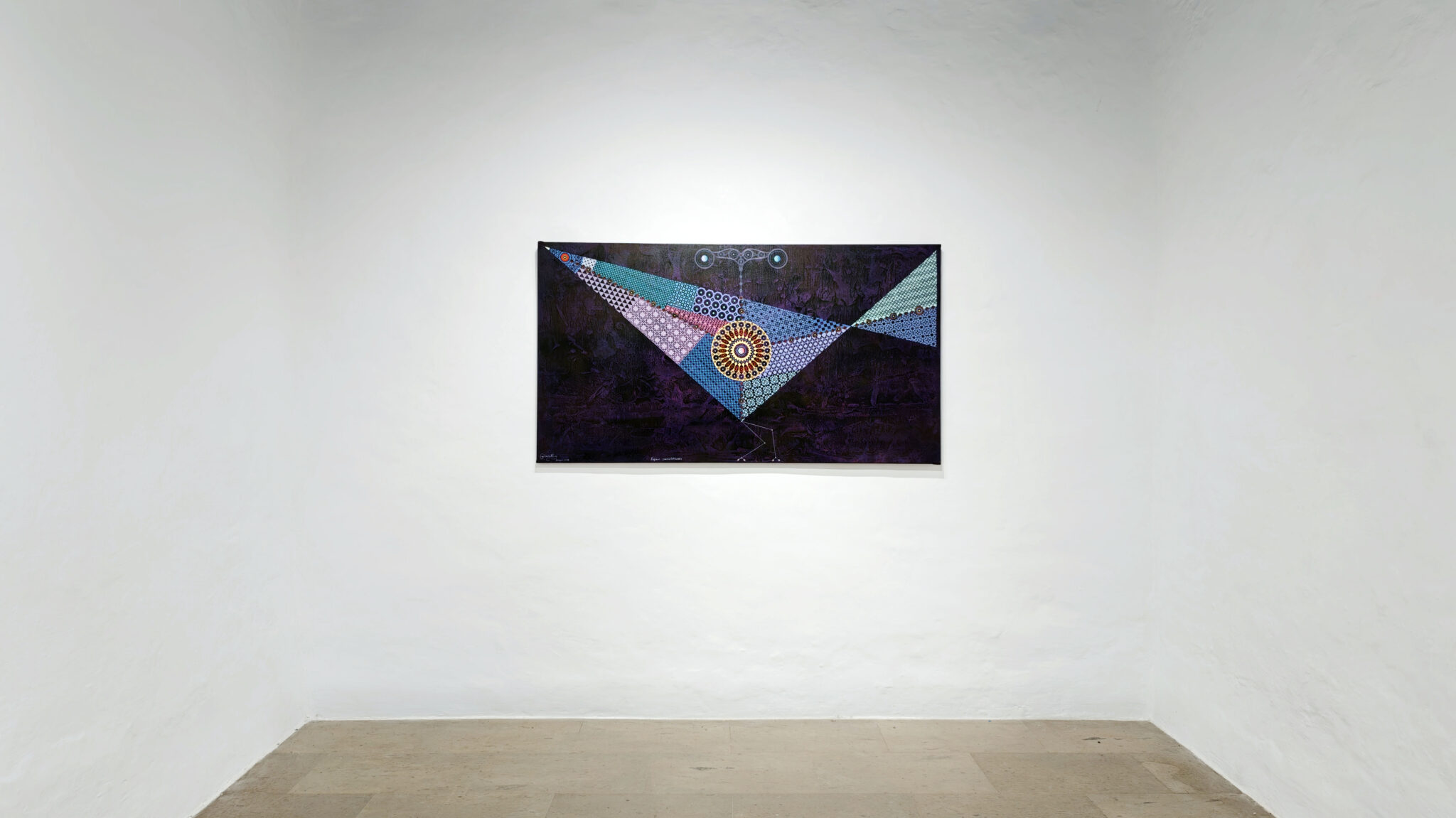
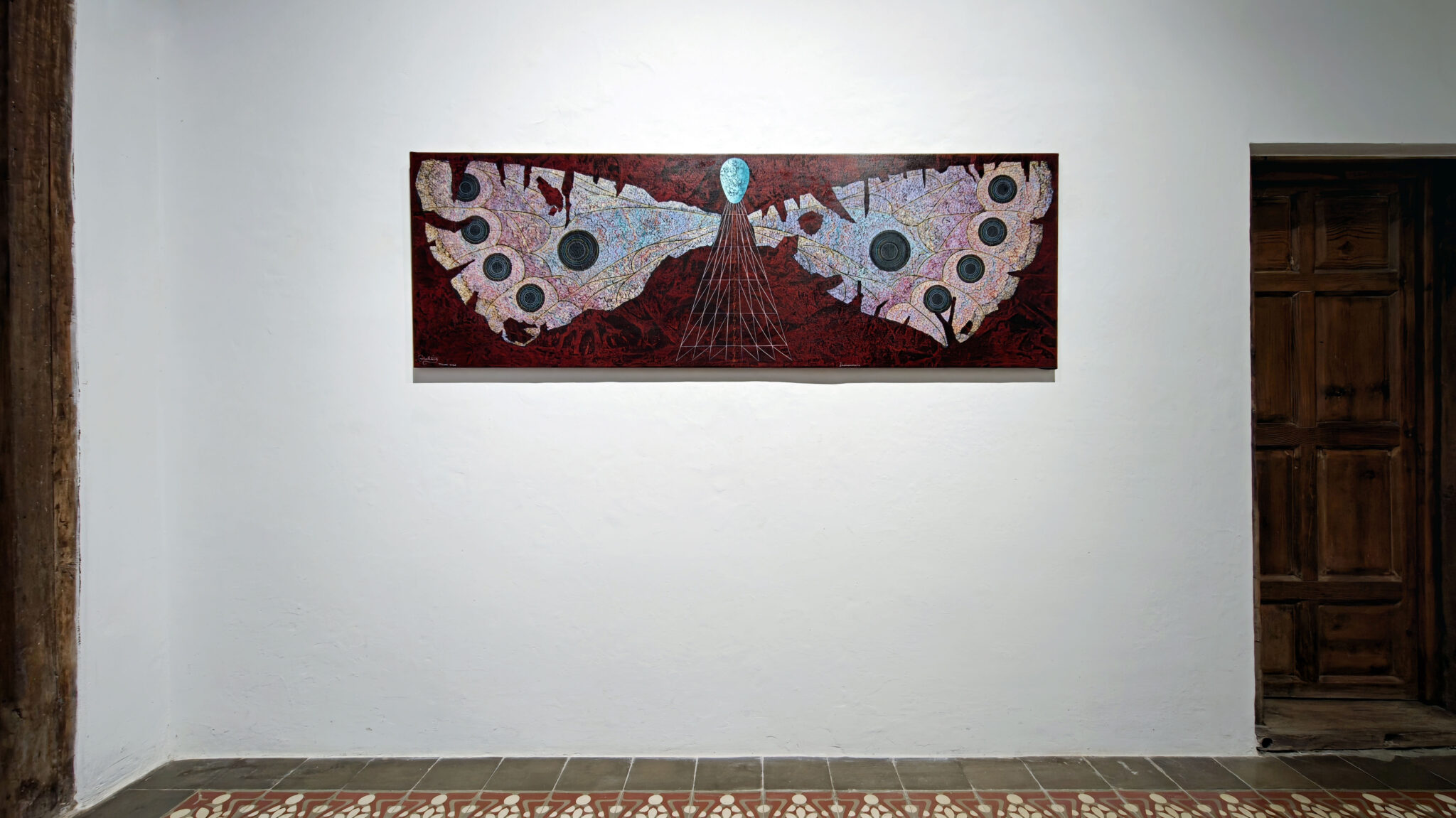
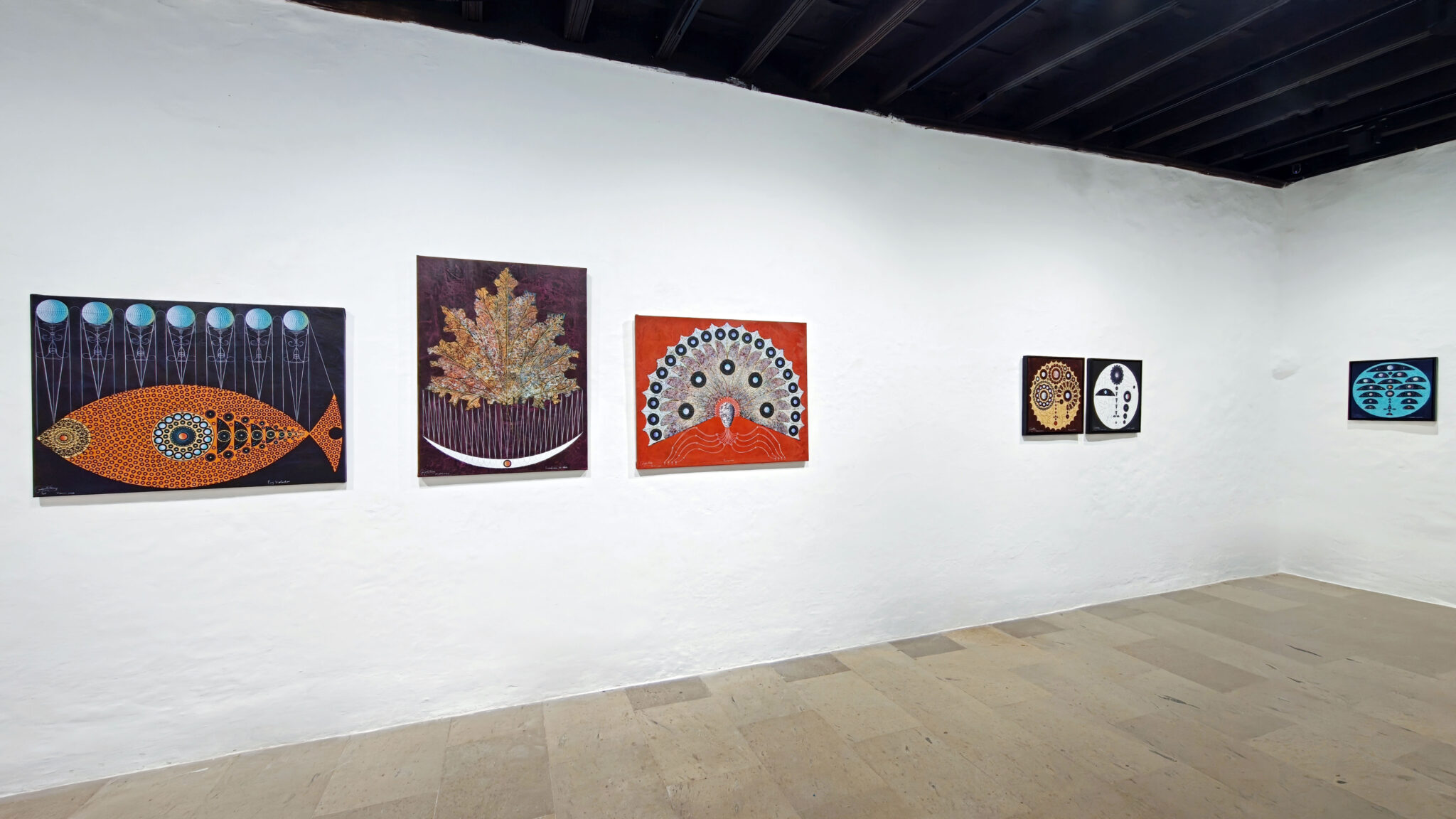
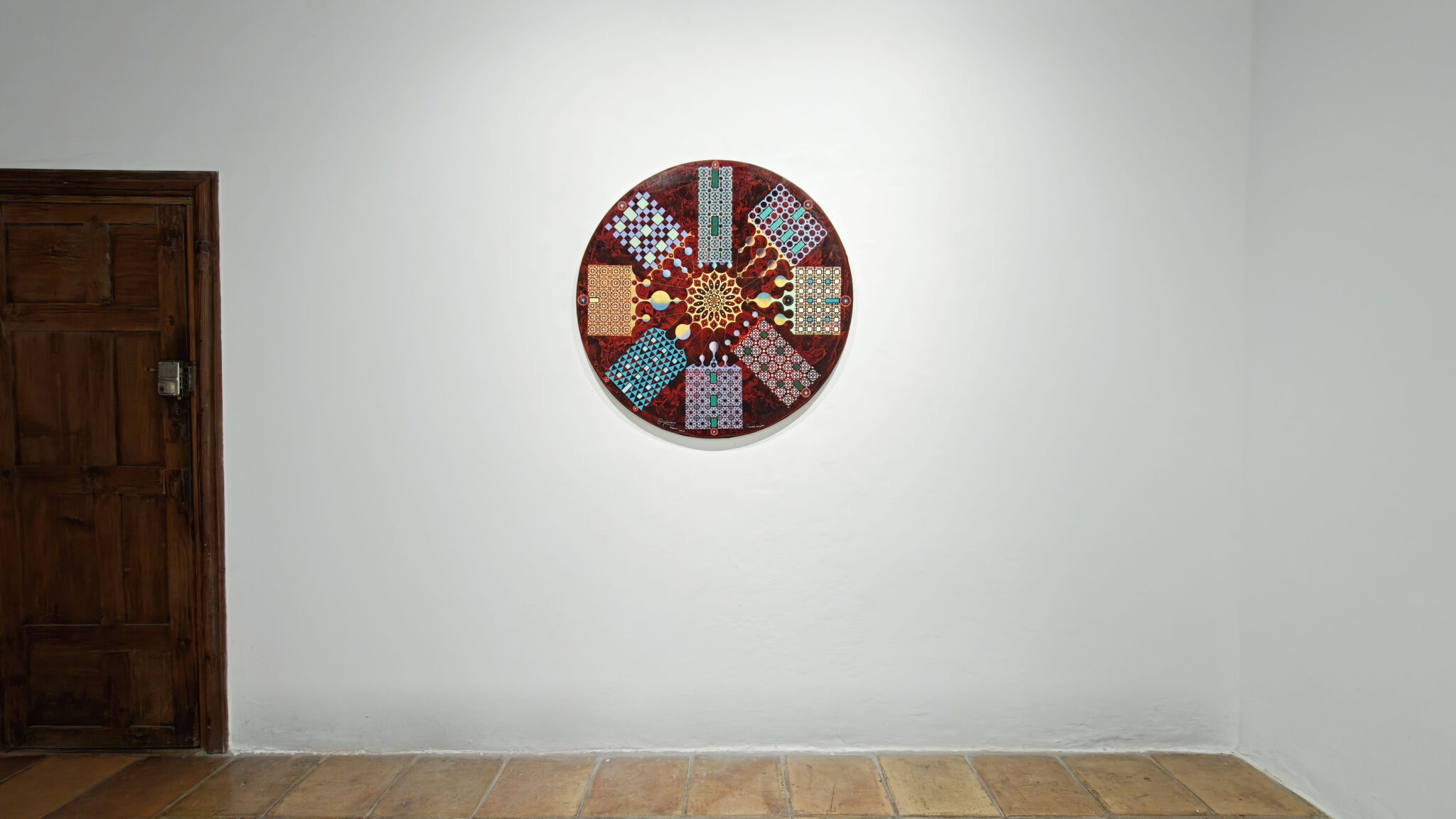
In his artworks, the island ceases to be a topography and becomes a state of mind. The accumulation of symbols, routes, fragmented bodies and poetic mechanisms points to a constant search for meaning: a need to connect the inner world with the outer, the human experience with something vaster and more transcendent. As if each drawing or painting were attempting to decipher a secret relationship between the individual and the cosmos. The immanence of the island we carry within takes the form of a ‘wandering lighthouse’, ‘flying fish’, ‘astronomical cathedral’, ‘observatory-traffic light’, ‘semi-dormant volcano’… because the artist does not draw what he sees, but rather what transcends the boundary.
And perhaps every island ends up doing precisely that: transforming distance into imagination and memory into a form of permanence. No island territory exists in isolation from the stories that run through it; islands are also built from the bodies that depart, return or remain suspended between one shore and another. In the case of Cuba and Tenerife, this shared condition seems to have generated a common sensibility, a sort of Atlantic memory that continues to shift through time. For centuries, generations of Canary Islanders set off for Cuba in search of new possibilities for life; later, others would embark on the reverse journey. Between the two territories, an invisible web of cultural legacies, ways of speaking, nostalgia and ways of understanding the world remained suspended. As Dr Yolanda Wood noted in her reflections on Caribbean studies, islands generate “other maps”: affective and cultural cartographies where the sea ceases to be merely a border and becomes a link as well. From this perspective, Carlos Estévez’s work seems to sit within the tradition of the artist who maps invisible territories and transforms the island experience into a poetic and ancestral exploration of existence.
In Immanence, past, present and memory coexist on the same plane, as if all human experience were composed of overlapping layers of history, migration and desire. The subject here is the result of multiple continuities: that which is inherited, that which is imagined and that which is inevitably carried within.
Jorge Luis Borges, evoking a parable attributed to Diderot, wrote: “You were already here before you arrived, and when you leave you will not know that you remain.” Because that patch of land in the sea never quite leaves us. It belongs to us and, in some way, we too belong to it forever. Perhaps what we call memory is not what we keep but the very act of seeking it: that perpetual movement between the shore we leave behind and the one that has yet to be named.