In 2026, the Venice Biennale will once again become the nerve center of the international contemporary art scene. Since its creation in 1895, the Biennale has established itself as the most influential and prestigious event on the artistic calendar, a space where institutions, galleries, collectors, critics, and artists from around the world converge. To be present in this setting means to enter into direct dialogue with the history of recent art and with the most urgent issues of the present, in a context where each national pavilion becomes a cultural embassy of its country.
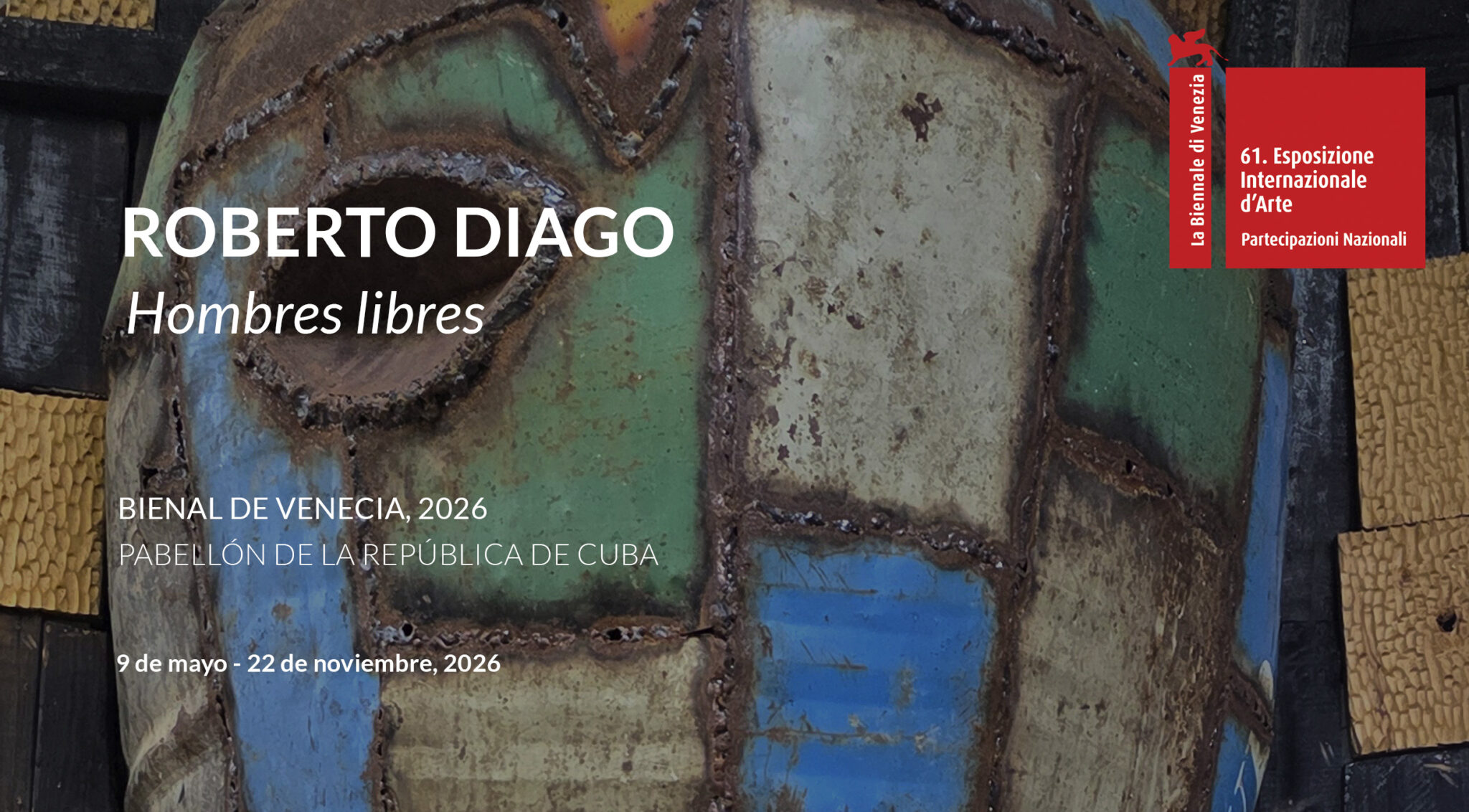
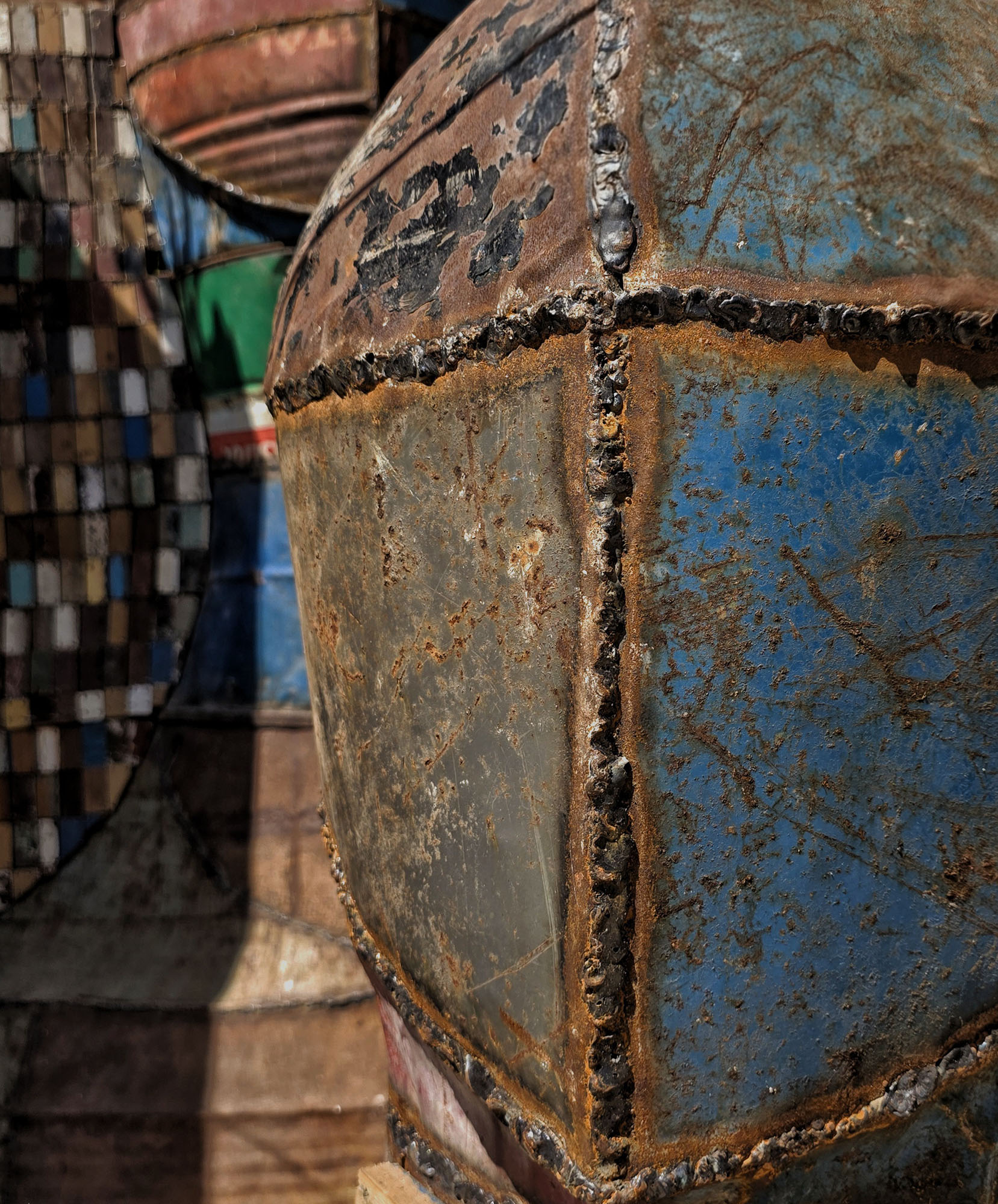
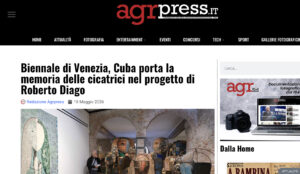
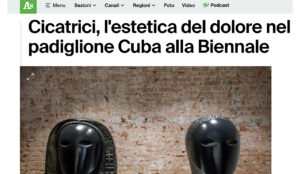
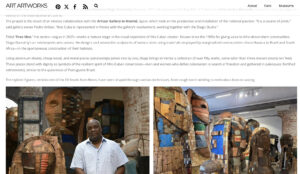
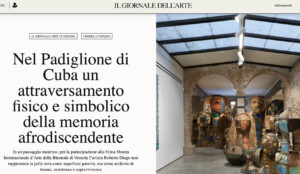
In the upcoming edition, Cuba will be represented by Roberto Diago (Havana, 1971), one of the most prominent artists of his generation, whose career has brought to the forefront historical memory, Afro-descendant identity, and the social tensions of the contemporary world. The project he will present in Venice, entitled Hombres libres (2025), marks a decisive step in his career and stands as recognition of the strength of an artistic language that has transcended borders and contexts. For any creator, participating in the Biennale is a milestone, but doing so as the representative of their country carries an even greater responsibility: giving voice to an entire cultural tradition and projecting it onto a global stage.
The significance of this event does not lie solely in the international visibility it provides, but also in the way it situates an artist’s work in dialogue with the most powerful discourses of contemporary art. The Biennale is not just an exhibition: it is a space of legitimation, a laboratory of trends, and a meeting ground for cultural debate on a global scale.
In this context, the involvement of a private gallery such as Artizar in the production and organization of the pavilion acquires an added value. For us, accompanying Roberto Diago in this project is a testament to our commitment to contemporary creation, to the internationalization of Cuban art, and to supporting artists whose work has the power to generate impact both within and beyond their place of origin. To take an active role in a project of this magnitude involves not only organizational and logistical effort, but also an institutional commitment to art as a tool of memory, resistance, and dialogue.
The project Hombres libres will be produced by Galería Artizar in collaboration with the Estudio Roberto Diago, and will mark a fundamental chapter both in the trajectory of the artist and in the recent history of our work as a gallery. For Artizar, being present at the Venice Biennale means reaffirming our vocation to act as a bridge between local contexts and global circuits, and strengthening the idea that the art we promote from our spaces can and should occupy a central place on the international stage.
The Venice Biennale is, ultimately, much more than an artistic event. It is a space of cultural representation and political encounter, a stage where the main lines of contemporary art are drawn, and where each country projects its identity through its artists. That Cuba will be represented by Roberto Diago in 2026, with the support of Galería Artizar, is a source of pride and also a reminder of the role that art can play in constructing collective narratives, reclaiming memory, and defending freedom.
PAVILION OF THE REPUBLIC OF CUBA
At the 61st International Art Exhibition – La Biennale di Venezia
FREE MEN (Hombres Libres)
Exhibitor: Roberto Diago
Commissioner: Daneisy García Roque
Curator: Nelson Ramirez de Arellano Conde
Location:
Il Giardino Bianco – Art Space
Via Giuseppe Garibaldi, 1814. Venice
From May 9 to November 22, 2026
In collaboration with and produced by: Galería Artizar
Jorge Fernández, Director of the National Museum of Fine Arts of Cuba, upon confronting the installation that represents Cuba at the 61st Venice Biennale, wrote:
“Hombres libres (Free Men) distinguishes those who suffered segregation, paying homage to the Maroons who chose death over enslavement, and revering those who risked their lives for an unmediated sovereignty. The work carries the malaise of our wounds, returning to that mixture of tenderness and agony observed in Wifredo Lam’s Huracán. In both lie the anathemas of an Island living in a constant storm since birth. These creators open themselves to a sea of references, from the sword of Ogun to the hope of Elegua.
Through this installation, Diago dialogues about the solidarity persisting among the country’s inhabitants despite the current context’s deprivations. Amidst vicissitudes, people help one another, exchanging clothes and shoes; many children are born already having a potential heir for their belongings. Each component of Hombres libres is inscribed upon the skin of this current Cuba. Its elements converse about the nation’s resilience…”